Bolivian workers’ thirst for a decent life remains unquenched
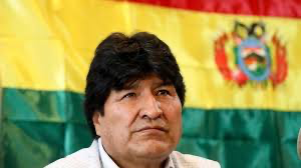
The portents were ominous following the election in November of a new right-wing president of Bolivia, Rodrigo Paz, and the humiliation of the Movement for Socialism (MAS), which had dominated the country’s political landscape for the past 20 years:
“Even before the new president was sworn in, in the House of Deputies the bible and cross were re-instated, even though the constitution defines the plurinational state as secular. The multi-coloured wiphala flag, one of the country’s three official flags, representing indigenous peoples, was removed from outside the presidential palace. Public bodies have replaced the chakana, the Andean cross, on their letterheads with the national shield” (Bolivia Information Forum, Bulletin 63, 1 December 2025).
Such changes are more than symbolic niceties. When Evo Morales, a former leader of Bolivia’s coca-growing trade union, and founder of MAS, swept to power in 2005, he instituted a wide-ranging re-calibration of the country’s stagnant neoliberal political and economic complexion. Bolivia’s majority indigenous population, of which he is a member, were for the first time granted equal rights and standing as other citizens, and their cultural attributes and languages (he himself is an Aymara speaker) were welcomed and celebrated. Under a new constitution, hallowed and venerated status was even granted to Pachamama – Mother Earth – and the philosophy of suma qamaña – ‘living well’ in Aymara – was enshrined as a revolutionary new environmental consciousness and perspective which demanded respect for nature and living in harmony with it.
On a practical note, Morales nationalised Bolivia’s lucrative hydrocarbon industries – the backbone of its economy – within a hundred days of becoming president. He had been carried to power on a wave of worker and peasant militancy which had built up over previous decades, and focussed on the so-called gas and water wars – a groundswell of popular demand for control of the landlocked country’s vital natural resources which had reached a crescendo.
Initially, he did not disappoint. The country’s GDP grew by an average of 4.8 per cent a year from 2004 to 2017, while the proportion of the population living in extreme poverty fell by more than half from 36 per cent to 17 per cent over the same period. In 2010 the World Bank changed Bolivia’s classification from ‘lower income’ to ‘lower-middle income’ after the country surpassed the $1,100 national earnings per person threshold for middle-income status. The MAS government also carried out a far-reaching programme of agricultural reform, redistributing some 134 million acres of land to indigenous families, many of whom had previously been subjected to semi-feudal exploitation.
Bolivia was also riding the commodities boom of the 2000s, in which the price for the country’s gas and oil shot up, pumping new revenue into the economy. Morales channelled that money into schools, hospitals and civic infrastructure. He also raised the minimum wage several times during his presidency, and provided grants to young children to enrol in primary education and remain in school. In 2009 he introduced old age pensions, and established a welfare programme for pregnant women – the Bono Juana Azurduy, named after a heroine of the struggle for Bolivian independence from Spanish rule – to finance regular visits to health care facilities during pregnancy, and in the first two years after childbirth.
So far, so good, but as an article in this magazine before Morales came to power had observed:
“… the needs of the Bolivian people are great and imperialism is not going to meet them. The Bolivian people show signs of having realised this and of being prepared to fight to the death for a better life. If the quality of their militancy and determination is matched by the quality of their leadership, then they will be invincible” (Lalkar, November/December 2003).
As the people of the Bolivian altiplano – the country’s high Andean plain – and its less extensive lowland and tropical jungle regions threw in their lot with one charismatic but politically unsophisticated leader, these words were to prove prescient.
A change in the economic weather
On assuming the presidency, Evo Morales had pledged to bring power to marginalised groups and to end discrimination, and he fulfilled that promise. MAS had won a majority in congress, and within two years of taking office Morales convened a constituent assembly to formulate a new, inclusive constitution which granted rights to indigenous Bolivians and those of African descent – the Plurinational State of Bolivia was born. The country’s judges were to be elected by popular vote, and political agency was decentralised.
With a buoyant world market the price of hydrocarbons skyrocketed, and even the nationalisation of Bolivia’s natural gas resources did not deter investors. But re-negotiation of contracts with foreign energy companies was not always concluded on favourable terms – the new Bolivian government demanded only a 51 per cent stake in such enterprises, and offered ample, over-generous compensation.
MAS was acutely aware that Bolivia, primarily an exporter of raw materials, would benefit greatly from developing its manufacturing base. But, predictably, gas prices eventually fell as discoveries were made elsewhere, and the state-owned gas company failed to consolidate production and invest adequately in new facilities.
A clash between the interests of indigenous Bolivians and farming campesinos in 2011 was perhaps a bellwether of things to come. The MAS government proposed building a road between the cities of Cochabamba and Trinidad which would pass through a national park and indigenous reserve, the Isiboro Sécure, known as ‘TIPNIS’:
“…the proposed road has brought to a head differences between the government and the lowland indigenous peoples and their organizations, between opening up new areas for development on the one hand and protecting the environment and indigenous people on the other. […]
“From the 1970s onwards, Aymara and Quechua campesino colonisers from the Altiplano and high valleys began to settle in the area to the south of the park, closest to Cochabamba and adjacent to the coca-producing Chapare area. They began to produce cacao, bananas, cassava, maize, citrus fruits and coca. With time, their numbers increased and pressure on the lands of the natural reserve grew” (Bolivia Information Forum Special Briefing, October 2011).
A march by indigenous groups anxious to protect their reserve from encroachment was violently dispersed by police, and Morales was obliged to temporarily suspend the road-building programme, which some had argued would primarily only benefit the economic interests of neighbouring Brazil for the transportation of goods. But the conflict was symptomatic of the divergent paths of conventional economic development and the people-centred model ostensibly championed by the MAS government. Macro-economic projects, as Morales should have known, could no longer be steam-rollered through, and the people – more traditionally represented by the trade union Confederation of Bolivian Workers (COB) which had for decades brought uncompromising militancy to the mining sector – would be on the streets to prove it.
Nonetheless, in 2017 Morales gave the go-ahead for building the controversial highway, accentuating the split between indigenous groups which stood to lose from the project and coca growers and other cultivators who would gain. He also encouraged ‘slash and burn’ practices in forested areas as a means of clearing land for more cattle-ranching and farming. A spike in this policy was linked to fires that blazed through the Chiquitania region – a unique area of tropical savannah and biodiversity in the east of the country – early in 2019, devastating the homeland of the Chiquitano indigenous people. According to World Wildlife Fund Bolivia, in the indigenous community of Monte Verde more than 250,000 acres of forest were burned. Hardly an indication of living in harmony with nature.
Overstepping the mark
Evo Morales had built up a huge personal following in Bolivia, although – as outlined – his policies could also prove divisive. The MAS leader was twice re-elected as president, but when he sought to stand for a fourth term of office in 2019 he had to bend the rules and make a court appeal to be allowed to run beyond the constitutionally mandated term limit. He had already narrowly lost a national referendum seeking to revise the laws in his favour, but remained undeterred.
Although he won the election, opinion in the country was split, and right-wing opposition groups made the most of allegations of polling irregularities and fraud. Unrest ensued, and security forces fired on protesters supporting Morales – more than 30 were killed. The writing was on the wall, and at the request of the Bolivian military the newly re-elected and hitherto seemingly unassailable former coca grower stepped down and fled for his life to Mexico, where he was granted political asylum.
There followed a year-long ‘interregnum’ when the presidency of Bolivia was assumed by a little-known right-wing senator, Jeanine Áñez – backed by the armed forces – who did her level best to undo as many of the social gains instituted by MAS as possible. Of course she was also supported by the United States, with whom Morales had had a frosty relationship, expelling the US Drug Enforcement Agency from the country.
It is to the credit of the Bolivian people that they agitated relentlessly for new elections and refused to confer any legitimacy on the Áñez regime. After a year of enduring what was effectively a dictatorship, Bolivian voters once again elected MAS to power – this time under the leadership of Luis Arce, who had served as finance minister under Morales.
Arce professed to continue implementing MAS policies – but under much more challenging economic conditions. By 2024, the Bolivian economy was limping along at 1 percent growth, central bank reserves were severely depleted and inflation hit 23 per cent. US dollars were scarce, fuel had to be imported and many Bolivians were struggling to make ends meet in the face of soaring food prices.
Meanwhile Morales, who had made a hero’s return to Bolivia, remained leader of MAS, although he was not in the government. There followed a momentous power struggle between him and Arce as they jostled for position to be the MAS candidate in the 2025 election. Arce was embroiled in accusations of corruption, with his sons mysteriously enriching themselves during his presidency. Some Morales supporters scathingly label him ‘Bolivia’s Lenin Moreno’ – a reference to the Ecuadorian president who reneged on the socialist policies of his predecessor and former compatriot, Rafael Correa.
What kind of future?
In a country where extractive industries have traditionally been the backbone of the economy, Bolivia’s lithium deposits – among the world’s largest – have attracted much attention from overseas investors in recent years. They are primarily located under the Salar de Uyuni, the world’s most extensive salt flats, in south-west Bolivia, near the city of Potosí. Ironically, Potosí is where silver mines first drew the Spanish conquistadors like a magnet during their spoilage of South America – to this day, the Spanish expression vale un potosí means ‘it’s worth a fortune’. And it undoubtedly is, but the question is: to whom?
After several failed attempts to build a lithium industry, the Arce government concluded a series of contracts at the end of 2024 with the Russian company Uranium One and Hong Kong CBC Investment Ltd. of China for the extraction of lithium carbonate directly from the salt flats. There would be no battery production or any other type of industrial processing to speak of. Rather, it would simply mean the exploitation of a natural resource for immediate export. Once again, Bolivia was condemned to remain a producer of raw materials.
In mid-2025, Standard & Poors lowered their credit rating for Bolivia from ‘CCC+’ to ‘CCC-‘, citing the country’s difficulty in servicing its external debt, and a negative economic outlook.
Meanwhile, with the 2025 elections looming, Arce managed to secure a judicial ruling disqualifying Morales from standing for office. Morales, whose personal conduct had been less than impeccable, was also being pursued by the Bolivian judiciary on charges of statutory rape, and found himself holed up and effectively in hiding under the protection of his coca growing comrades in the Chapare hills. But Arce was also becoming increasingly unpopular as Bolivians wrestled with the acute economic crisis, and MAS eventually settled on a different presidential candidate, Eduardo del Castillo.
Under the circumstances, Morales appealed to his supporters to cast a ‘null and void’ protest ballot in the first round of the poll, and an impressive 19 per cent of voters did. Del Castillo garnered a meagre 3 per cent of electoral support, leaving the once mighty MAS with a single seat in the lower house of congress, and none in the senate. The run-off was between two right-wing neoliberal candidates.
The new president, Rodrigo Paz of the victorious Christian Democrat party (PDC), wasted no time in appointing a government in which business interests are powerfully represented. The government is looking for loans from multilateral banks and towards mending fences with Washington. Although fuel shortages have been partially resolved, other problems of immediate concern, such as a dollar scarcity and the high price of basic necessities, remain to be dealt with. The promised removal of state subsidies is likely to present the new government with significant popular opposition.
Concessions for exploiting Bolivia’s lithium reserves are now expected to be offered to Western investors – instead of the Russian and Chinese companies that were originally offered preferential access but have yet to ramp up production.
Evo Morales and his followers remain the great imponderable of Bolivian politics – the 65-year-old veteran politician still has the power to mobilise masses of the populace. But for the moment, the long-suffering workers of Bolivia will have to look for a more solid strategy to assert the rights and protagonism which they seemed so close to securing, but which once more have eluded them.