Chilean voters revive the ghost of Pinochet
‘The rich people in my country were always foreigners –
let them fly off to Miami with their aunties.
I don’t want my country divided –
let them take their tune somewhere far, far away.’
These defiant words by Chile’s Nobel Prize-winning poet Pablo Neruda were set to music by his compatriot Victor Jara early in the fateful year of 1973. A few months later, Jara – a communist – was tortured and killed days after the military coup led by General Augusto Pinochet. Neruda, a fellow communist, also died – quite possibly poisoned – while in hospital in the aftermath of the coup.
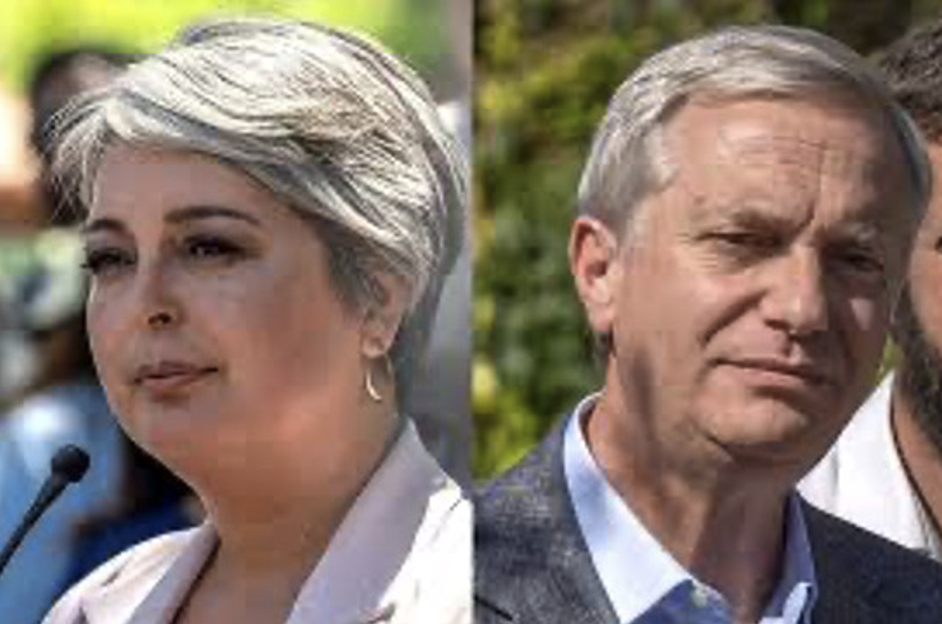
In December 2025 the Chilean electorate chose a professed admirer of Pinochet, José Antonio Kast, as the country’s new president. In the first round of the election the Communist Party candidate Jeannette Jara (no relation) had emerged victorious, but she was comprehensively defeated in the run-off against Kast, gaining 41.8% of the vote against his 58.2%. Kast’s Republican Party had been bolstered by an unholy alliance of right-wing and far right forces.
Kast, the son of a German Nazi refugee who escaped trial at the end of the Second World War, had campaigned on a ticket of virulent anti-communism, and played on popular fears and insecurities which he associated with an influx of immigrants, notably from Venezuela. Some 700,000 Venezuelans have entered Chile over the past decade.
“Kast repeatedly presented migrants as the reason for rising insecurity. During the campaign, he gave the roughly 330,000 undocumented migrants – most of them Venezuelan – an ultimatum to leave before the next president takes office on 11 March or be expelled ‘with only the clothes on their backs’.
“In his victory speech, in which he repeatedly said Chileans were living in ‘fear’, the president-elect said his administration would show ‘great firmness in confronting all those who harm us’.
“He added: ‘When we tell an irregular migrant that they are breaking the law and must leave our country if they ever want the chance to return, we mean it … We must show great firmness against crime, organised crime, impunity and disorder’” (Tiago Rogero, ‘Ultra-conservative José Antonio Kast elected Chile’s next president’, The Guardian, 14 December 2025).
The fear-mongering and xenophobic tone chimes with the rhetoric of Kast’s counterpart in neighbouring Argentina, Javier Milei, and the bigoted intolerance of their mentor, US president Donald Trump.
With annual inflation running at around 4%, and unemployment standing at 8.6% between June and August 2025, Kast had focused on the country’s “disastrous situation”, accusing the outgoing government led by Gabriel Boric of being “the worst in Chilean history” and of having brought Chile to the brink of collapse. Predictably, along with the neo-liberal mantra of promising fiscal discipline and market confidence, Kast pledged to cut public spending by six billion dollars in the first 18 months of his administration.
Dashed and unrealised hopes
In fact, Kast inherits a relatively stable economy from a government which has prioritised responsible financial housekeeping and long-term infrastructure plans. Boric’s Frente Amplio (Broad Front) regime – a coalition of relatively progressive parties – has proved itself the perfect steward of neo-liberalism in Chile. Its election had broken the mould of a political system that had been dominated for 30 years by the traditional right and centre-left. But as one of its youthful deputies, Diego Ibáñez, recently confessed: “Frente Amplio is a historical exception: we were a flash in the pan associated with the student movement. No one planned that a few years later we would be in government, disputing a constitutional process. It was a very dizzying thing.”
The Boric government had come to power in 2022 on a wave of working-class sympathy following the ‘popular uprising’ which had shaken the country in 2019. Initially triggered by a hike in prices for underground travel in the capital, Santiago, the movement became spearheaded by Chilean students, bringing out onto the streets millions of people for whom the hardships of daily life had become too much. On the orders of the right-wing president at the time, Sebastián Piñera, the unrest was ruthlessly suppressed by the notorious carabineros – the riot police – and there were multiple cases of students on peaceful demonstrations losing an eye.
Boric, a student leader from a privileged background, was catapulted into prominence, but the huge outpouring of popular anger and discontent was not harnessed to become a united and irrepressible political movement. It remained fragmentary, and the high hopes which accompanied the election of Boric – aged only 36 – as president gradually dissipated. His government pushed through some progressive measures, such as reducing the working week from 45 to 40 hours (something which Kast has vowed to repeal as a matter of priority). The measure was shepherded through by Boric’s minister of labour, Jeannette Jara, and earned her some of the respect and popularity which she was able to capitalise on in the recent election. The Boric government also boosted pensions in Chile, but as these are privately administered in the country the policy gave a lift to companies and corporations rather than pensioners themselves.
Perhaps the flagship strategy of the Frente Amplio government was to try to replace Chile’s constitution, dating from 1980 during the Pinochet military dictatorship (1973-1990), with something more enlightened and inclusive, untainted by the authoritarian ethos of the jackboot. A period of broad consultation was followed by the formulation of a painstakingly assembled document worthy of a progressively-minded 21st century country – but it was roundly rejected in a nationwide plebiscite.
Deceit and delusions
Boric’s proposed new constitution had included significant recognition of the rights and autonomy of indigenous peoples – notably the Mapuche in the south of the country – strong measures to enforce environmental protection, and improved access for all Chileans to health care, education and housing. So why did it fail?
Given the radical nature of many of the proposed changes, right-wing forces in Chile rallied around a campaign to block the new constitution. More than 50 years previously on a visit to Chile, Fidel Castro had warned President Salvador Allende, leader of the country’s Popular Unity government (1970-1973) – often referred to as the world’s first elected Marxist government – that he should clamp down on the virulent right-wing press exemplified by the daily newspaper El Mercurio, a cheerleader for private enterprise and unbridled capitalism which had become a focal point for undermining and sabotaging Chile’s fledgling socialist regime.
Allende, perhaps out of an ingenuous respect for bourgeois democracy – after all, it’s not as if the left has the funds and advertising revenue to launch a widely circulated national newspaper – did nothing. El Mercurio, predictably, fêted Pinochet’s coup and became a mouthpiece for the repressive military dictatorship which ensued. In 2023, why, it was El Mercurio – now endowed with a television channel and sophisticated video facilities – that was at the centre of the campaign to discredit and reject Boric’s proposed new constitution. Plus ça change.
It might be mentioned in passing that Fidel Castro similarly remonstrated with Hugo Chávez on a visit to Caracas for doing nothing to curb the bile spewed out by two of Venezuela’s main ‘quality’ newspapers, El Nacional and El Universal – a more extreme and propaganda-laden version of Britain’s Telegraph. Had the Bolivarian revolution dealt firmly with the country’s ‘yellow press’, it might have averted some traumas further down the line.
This is the dictatorship of capital in actual fact, which must be properly reckoned with by any real socialist movement – just as the reactionary Barbadian paper The Gleaner was mobilised against the popular revolutionary New Jewel movement in Grenada, as noted by its then President Comrade Maurice Bishop. These papers have links to the rich ruling capitalist class, the political right and to the foreign intelligence services – particularly the CIA. They are the voice of the enemy speaking directly to the people, and they do incalculable damage.
Financial good housekeeping
The Boric government showed disciplined fiscal management: gross public debt was 43.2% of GDP at the end of 2025 – the smallest annual increase in 17 years. It also clocked up record levels of public investment and stable sovereign ratings – A/A2: “There is no imminent crisis or massive diversion of funds; social spending increased responsibly post-pandemic without compromising sustainability” (Claudia Aranda, ‘The financial handover of Boric to the next government of Chile: debunking myths of “blatant theft” and bankruptcy through sovereign bonds’, Pressenza International Press Agency, 13 December, 2025).
But financial good housekeeping had come at a cost of reining in social programmes promised to benefit working people, and the popularity of the Boric government steadily waned. Added to this was the contradiction of a social democratic president ostensibly wedded to progressive measures, but who simultaneously shunned Cuba and Venezuela as ‘dictatorships’, and whose government sent money and military supplies to Ukraine. This was a circle that the supposedly communist candidate in the recent election, Jeannette Jara – herself a professed social democrat – could not square, and it cost her votes among a disenchanted populace. The notion that one can half-heartedly compromise with and pander to imperialism – à la Corbyn – is simply laughable. Straying even slightly from the interests of the bourgeoisie will incur their irreconcilable ire. Nothing less than total capitulation, at this time of global capitalist economic crisis, will do. Pandering to the imperial war-propaganda and neo-liberal economic policy merely gives credence to all their claims that capitalism is the ‘end of history’, and undermines any hope of building a movement and economy that serves the interests of the working people.
Seeking a clarity of vision
While the historically militant Communist Party of Chile (PCCh) indulged in class collaboration, a break-away group formed in 1976, the Communist Party – Proletarian Action (PC-AP) also took part in the recent election. Its presidential candidate, Eduardo Artés – a respected professor of education – only gained 1.8% of the vote in the first round, but he relished the opportunity of touring the country to disseminate the message of a different brand of communism:
“Both candidates in the election run-off are in favour of maintaining the existing system, and having cordial relations with the US ambassador. The Chilean Communist Party is a party which has abandoned Marxist-Leninist principles. The Boric government has de-politicised the people, presenting a progressive face but maintaining the status quo. We have a revolutionary programme which includes recouping Chile’s natural resources, re-structuring the armed forces and giving a political direction which shows that socialism is superior – not to renege on things which leave people deceived” (Interview with Red Planeta, Spain, 28 December, 2025).
The natural resources to which Artés is referring are primarily copper, of which some 45 per cent of the world’s reserves are found in Chile, and lithium:
“The Lithium Triangle is one of the most important geostrategic sectors in the Latin American landscape. Spanning through Chile, Argentina and Bolivia, the Lithium Triangle is home to between 60 to 75% of the earth’s known lithium reserves and is the centrepiece of the global energy transition.
“While South America possesses the resource, China dominates the ability to process it, holding a near-monopoly on the global industry. Unsurprisingly, Chinese companies have built a strong and visible presence across the lithium industries of all three countries.
“But elections across the Triangle have begun reshaping this landscape. Recent political shifts in Bolivia and Argentina have weakened China’s position and opened new doors for the United States, turning electoral outcomes into a wildcard with the power to alter geostrategic dynamics in the critical minerals sector.
“Now, in Chile, the crown jewel of the Lithium Triangle, the results of the presidential election suggest the regional political pendulum is swinging to the right, potentially extending a trend that is increasingly unfavourable to China’s strategic interests” (China Global South Project, 12 December 2025).
Conclusion
Nevertheless, if the people of Chile are ever able to take control over their own country’s resources, restructure the armed forces and implement a socialist economy, this is not going to be achieved through the ballot box. If nothing else Chile’s experience of the bloody overthrow of the Allende government has proved that beyond any possibility of doubt.
We must also note that Engels is most explicit in calling universal suffrage an instrument of bourgeois rule. Universal suffrage, he says… is “the gauge of the maturity of the working class. It cannot and never will be anything more in the present-day state” (quoted by Lenin in The state and revolution).
“…the omnipotence of ‘wealth’ is more certain in a democratic republic [because] it does not depend on defects in the political machinery or on the faulty political shell of capitalism. A democratic republic is the best possible political shell for capitalism, and, therefore, once capital has gained possession of this very best shell… it establishes its power so securely, so firmly, that no change of persons, institutions or parties in the bourgeois-democratic republic can shake it” (ibid.). This basic and fundamental lesson of Marxism-Leninism must never be forgotten. Participation in bourgeois elections can only be for exposing the fraud of bourgeois parliamentarism, never for trying to use it to establish socialism.
The CIA regime-change apparatus works hand in glove with the US manipulation of the state machine, information space and entire governance framework to ensure that compliant governments are constantly reproduced within the American hemisphere – and beyond. The scale of operations spans the gamut of operations ranging from press propaganda all the way to the murder and kidnapping of hostile presidents and their incarceration in the dungeons of Washington. These events are not, of course, unfolding in a vacuum.
It doesn’t take crystal ball-gazing skills to anticipate that the incoming Kast government will do its compliant best to divert as much of this business as possible to the United States. But it will not be straightforward, and other legislation will face the obstacle of not enjoying a congressional majority. Nonetheless, an ultra-conservative is taking possession of La Moneda, the presidential palace once strafed by British Hawker Hunter jets at the behest of General Pinochet – and his minder, Henry Kissinger – to oust a Marxist president.
Kast is a pivotal figure of the Chilean hard right, painting himself as a practising Catholic and family man who opposes abortion and embraces the neo-liberal economics pioneered by the ‘Chicago Boys’ during the Pinochet dictatorship. All the signs are that there will be inequality, social confrontation and free market orthodoxy – the things that Chileans rejected so vehemently when they supported Salvador Allende half a century ago.
The Pinochet dictatorship did its level best to wipe out all traces of that time of cultural flowering and political fervour – with some success. But it will not be lost on Chileans that the country has come full circle, and a civilian neo-fascist has been able to walk into La Moneda palace rather than a general forcing his way in, hands dripping with blood.
This turn of events will be of no comfort to the 30,000 Chilean victims of Pinochet’s torturers. In the years following the dictatorship, steps were taken to ‘make amends’ to those who had survived and lived in forced exile by offering small monetary sums ‘in compensation’. But as one of them confided to Lalkar: “Not for a few pesos am I going to accept recompense for what they did”.
The memory of those traumatic years cannot be obliterated. Nor the idealism of the Chilean left that preceded them. Pablo Neruda wrote, and Victor Jara sang:
“I don’t want my country divided –
there’s room for all of us in my land.
I’m staying here to sing with the workers
of this new history and geography.”
Was Neruda’s new history and geography just a chimera? Somewhere in the Chilean DNA is the seed of a revolutionary consciousness that – perhaps in the face of impending neo-liberal adversity – must surely flourish and grow again.