OBITUARY – Ayatollah Hussein Ali Khamenei
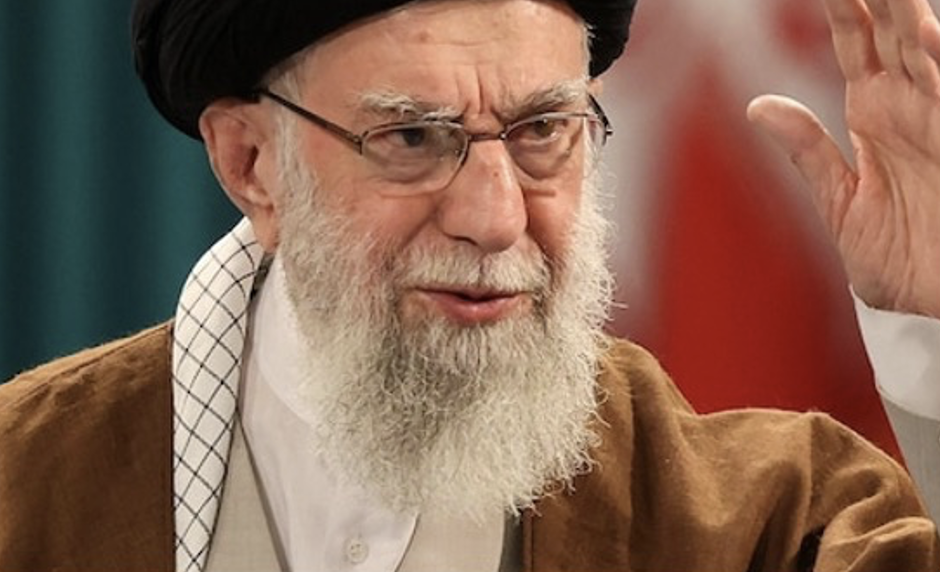
The leader who defined modern Iran
Reproduced from Grandmasters of Geopolitics, with thanks
The life of Ayatollah Ali Khamenei — from a student in the holy city of Mashhad to the untimely end of his 36-year reign — is a story interwoven with the history of modern Iran.
As the world reacts to his death in the US-Israeli strikes, we look back at the moments that defined his legacy. 👇
1️. The birth of a revolutionary: standing against the Shah
Long before he wore the mantle of Supreme Leader, Khamenei was a young firebrand. Born in 1939 into a modest religious family, he was an effective orator who joined the movement to overthrow the Shah.
In the 1960s and 70s, he was arrested six times by the Shah’s secret police, SAVAK, enduring torture and internal exile. These years of underground resistance solidified his revolutionary credentials.
2️. 1981 assassination attempt
Khamenei was delivering a lecture at a mosque in Tehran On June 27, 1981, when a dissident group (the MEK) detonated a bomb hidden in a tape recorder placed in front of him.
The explosion severely damaged his lung and permanently paralysed his right arm. The fact that he survived was seen by his followers as a sign of divine will.
3️. 1985 suicide bombing: Resuming the sermon in 3 minutes
Even after becoming President, the threats continued. In March 1985, a suicide bomber detonated an explosive at a packed Friday prayer session at Tehran University while Khamenei was preaching .
The explosion killed the bomber and several others, but Khamenei was unharmed. After a pause of just three minutes, he resumed his sermon. He immediately blamed Iraq and vowed, “We will answer every fist with a harder fist“.
4. Reluctant president and wartime commander
During the devastating 8-year Iran-Iraq war (1980-1988), Khamenei served as president and Khomeini’s representative on the Supreme Defense Council. He spent months on the front lines, witnessing the deaths of countless commanders and soldiers. The war, and the West’s support for Saddam Hussein, solidified his deep and permanent distrust of the US.
5️. Unexpected succession
When the “Father of the Revolution,” Ayatollah Khomeini, died in 1989, the chosen successor (Montazeri) had fallen out of favour. The Assembly of Experts turned to Khamenei, despite him not being a marja (a top-tier religious authority) at the time.
In his first speech as Leader, he admitted: “I am an individual with many faults and shortcomings and truly a minor seminarian.” The constitution was later changed to allow him to serve.
6️. Fatwa on nuclear weapons
Khamenei issued a fatwa (religious decree) in the early 2000s forbidding the development of nuclear weapons, declaring them un-Islamic. Despite the fatwa, the the West kept claiming that Iran was seeking a nuclear bomb.
7️. You will remain in my soul, homeland
One of his most poignant and human moments occurred just last year. During an Ashura ceremony in Tehran, Khamenei did not deliver a speech. Instead, he silently summoned the eulogist Mahmoud Karimi and whispered a message to him. Karimi then announced to the crowd: “His Eminence told me to recite this: ‘You will remain in my soul and heart, O homeland…'”
8️. Final warning
Just one month before his death, as US forces massed in the region and President Trump threatened to strike, Khamenei emerged to deliver his final public warning.
He stood before his people and declared: “The Americans should know that if they start a war, this time it will be a regional war.“
Ayatollah Khamenei was the last link to the 1979 Revolution’s founding generation. His death leaves not just a power vacuum, but closes a chapter on Iran’s modern history.