Obituary – the late and unlamented Eddy Shah
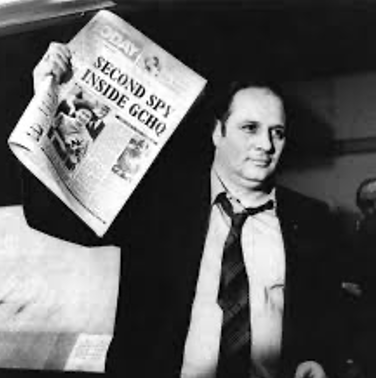
The news that newspaper proprietor Eddy Shah had died at the age of 81 did not make headline news, notwithstanding the obituaries sections. Indeed, the name Eddy Shah would today only have resonated with people of a certain age, given that his coming to prominence in his field occurred over forty years ago. But Eddy Shah, a local newspaper proprietor who owned a group of free papers in Warrington, Cheshire brought about a revolution in the production of newspapers which not only was ruthlessly exploited by Rupert Murdoch, culminating in the Wapping Dispute of 1986, but was subsequently adopted by every newspaper in the country, including the Morning Star.
It was these changes in newspaper production that opened the door to the launch of new newspaper titles, including The Independent and the short-lived Sunday Correspondent, which was notable for employing the services of Henry Kissinger as a football columnist. But more critically, it led to the complete destruction of the print industry, the terms and conditions of the workers who toiled in the industry and swept away decades of acquired and well-rewarded skills forever.
Shah and a life in print
Eddy Shah was born Selim Jehane Shah in Cambridge on 20 January 1944 to an English mother and Iranian father. He was raised in the main by his grandparents in India, but was sent to a private school in Scotland and, after being suspended on two occasions, completed his secondary education in Sussex. Shah’s early jobs included being a stagehand, a floor manager at both the BBC and Granada TV and at the Manchester Evening News. Having been made redundant from there in 1976, Shah used his redundancy money and the proceeds of the sale of his house to launch a series of free newspapers in the north-west region of England under the name of Messenger Group.
At the time, the print unions were extremely well organised and powerful. The most powerful print union was the National Graphical Association (NGA), who used the ‘closed shop’ (an agreement between the employer and trade union whereby the employer only hires workers on condition of their membership of that trade union) to good effect and whose class-conscious members could and did shut down print works at extremely short notice.
The NGA approached Shah, saying that they wanted to unionise the workers in his group of newspapers. Shah agreed to a vote of the workers being taken, but when six of the workers voted against unionising, the NGA called on Shah to sack them. Shah refused. While Shah could have dismissed the six workers, a case in 1964 – Rookes v Barnard and others – meant that Shah could have been held liable for punitive damages had the six workers taken legal action.
Rookes and the closed shop
Douglas Rookes was a draughtsman who worked for the British Overseas Airways Corporation (the predecessor to British Airways). He was also once a member of the Association of Shipbuilding and Engineering Draughtsmen (AESD) until he decided to leave the union after a dispute. Because BOAC and AESD had a closed shop agreement, the union demanded that the corporation sack Rookes and workers threatened to go on strike if either he didn’t resign or wasn’t sacked. The BOAC suspended Rookes for months, presumably while they decided what to do, before they sacked him with a week’s pay in lieu of notice.
Rookes responded to his sacking by suing his former trade union’s officials, including the chair of his former branch, claiming that he had been subjected to what is called ‘tortious intimidation’ – a civil law term which means a wrongful act which causes harm. Rookes made the case that he had been sacked despite him not breaching the terms of his contract and that he would not have been sacked were it not for the actions of his colleagues, who threatened to strike if he did not leave.
Rookes essentially argued that he had lost his job because of the closed shop. He won his case in court, but the decision was overturned on appeal. Rookes continued to pursue his case, taking it to the House of Lords, who seized on an opportunity presented to them by Rookes to curtail closed shop agreements and overturn the decision of the Court of Appeal, an opportunity they duly took.
They found that the Trade Disputes Act 1906 , which protected trade unions from being sued for damages having taken industrial action, did not protect trade unions or their members from behaving in an intimidatory manner towards members or ex-members. The union, which by this time was known as the Draughtsmen and Allied Technicians’ Association, had incurred considerable costs as a result of losing this case and delegates at the Trades Union Congress in Blackpool in 1964 warned of the serious threat that the House of Lords’ ruling could have on the legal rights of workers to strike.
While the Trades Disputes Act 1965 reversed most of the adverse impact of the House of Lords’ ruling, the ruling remained authoritative on punitive damages against trade unions and employers.
Shah and the print unions
Shah’s refusal to sack the six errant workers was met with a concerted and organised response from the NGA. Six other members of staff at the Warrington Messenger newspaper walked off the job in protest against Shah’s refusal to implement a closed shop agreement. Shah responded by sacking them.
Union members besieged the print works to prevent newspapers from being printed or leaving the print works. The police were called in to escort delivery vans and secure the distribution of the newspapers. With the dispute spreading across the group and 4,000 workers descending on the Stockport Messenger’s printing plant, the police were further mobilised to break up the picket line. Pitched battles broke out between both sides, with police forcibly breaking up picket lines and workers responding by throwing rocks and bricks. The clashes would become known as the ‘Battle of Winwick Quay’ and dozens of strikers were injured.
The tactics deployed by the police in putting down the picket, including donning riot gear and forming protective walls, the use of roadblocks and checkpoints, mounted charges and excessive, brutal force, would be deployed to full and ruthless effect in the 1984-85 Miners’ Strike.
Shah then took full advantage of two pieces of bourgeois law implemented under the Thatcher government: The Employment Acts of 1980 and 1982. The 1980 Act banned secondary picketing (workers picketing locations other than the one where the dispute is occurring), while the 1982 Act banned the closed shop, where all employees must be member of a specific trade union. The Warrington Messenger dispute would give Shah, and the ruling class, an opportunity to test these newly-introduced laws.
Shah secured an injunction against the NGA and the union was initially fined £50,000. However, the NGA refused to either co-operate with the courts or pay the fine, so were fined a further £100,000, then fined again to the tune of £250,000 and were then fined again another £375,000. In November 1983, with the union refusing to pay the £675,000 fines levied on it, the court ordered that the NGA’s funds be sequestered.
Now, with £10m of its assets seized, the NGA approached the TUC for help, but General Secretary Len Murray (later Baron Murray of Epping Forest, OBE) repudiated the union and the General Council of the TUC refused to follow through on promises of support given to the strikers at a special Congress in 1983. The NGA had been betrayed, left completely isolated by the official trade union movement and so were forced to concede defeat. But this defeat did not only set back the print workers; it was a hammer blow to the entire working class and set a template for smashing organised industrial action which Rupert Murdoch was to use to devastating effect just two years later.
Today
On 4 March 1986, Shah launched the first new daily national newspaper in Britain for decades, entitled Today. Launching a daily national newspaper from scratch was an extremely difficult endeavour, even at a time when circulations ran into the millions as they did in the 1980s, but Shah believed that he had an edge that could make the newspaper financially viable: It would be the first full-colour daily newspaper to deploy computer-based typesetting – technology which took the task of newspaper formatting away from the print workers and dropped it firmly into the lap of journalists.
For decades, newspapers used Linotype machines to compose text for printing newspapers and the system, while working extremely well since the end of the 19th century, required a 6 to 7 year-long apprenticeship to learn how to operate the machines proficiently and also how to maintain and repair what was an extremely intricate and complicated piece of equipment. This made them highly skilled and specialised workers, who worked shifts (mainly nights) and were often paid on a piecework basis (in effect paid by the letter). This, along with the considerable strength of the trade unions which represented them, made these workers amongst the most powerful in the working class.
But the technology which Shah deployed in the production of Today would sweep away all these old working methods and the skills which went with them. The printing presses themselves produced colour printing of variable quality which could not be checked until the product was finished and the software which was used to lay out each page of the paper was notoriously unreliable and was prone to crashes, yet the launch of Today caused quite a stir in Britain in 1986.
Shah also seized on an opportunity presented to him by the treacherous and contemptible Electrical, Electronic, Telecommunications and Plumbing Union (EETPU), which was led by the arch-reactionary and class collaborator Eric Hammond. The EETPU made it their business in the 1980s to make sole-recognition deals with employers in return for no-strike agreements, which not only deprived other trade unions of the right to organise in workplaces where the EETPU held such agreements, but it also denied the EETPU’s own members the right to ‘legally’ withdraw their labour.
Shah made a sole-recognition agreement with the EETPU, de-recognised the NGA and in doing so swept away the hard-won terms and conditions which workers had built up over decades across the industry.
Murdoch, Wapping and the transformation of the industry
The whole British newspaper industry, whose daily circulations then ran to over 10m copies, saw the technology that Shah deployed, and the sole-recognition agreement that he had made with the reprehensible EETPU, as an opportunity not only to cut their costs and increase profits, but as a golden opportunity to smash, once and for all, the vice-like grip that the print unions had over their industry. The chief antagonist would be Rupert Murdoch, owner of titles including The Sun and The Times.
Murdoch, whose News International titles in Britain were then published and printed in London’s Fleet Street, was developing a new printing facility in Wapping in east London, where part of the city’s long-abandoned docks once stood. His plan was to use this facility to launch a new daily evening newspaper, the London Evening Post, to rival the established London evening newspaper, the Evening Standard. In fact, the launch of this newspaper was a ruse to lure the print workers into a trap which led to the arguably the last major class conflict in Britain in the 1980s.
The facility at Wapping, which deployed new printing technology and computer-based typesetting, was anticipated to be run by workers who were members of the EETPU, with journalists using computer-based technology to write their articles straight onto the pages of the newspaper.
But the London Evening Post never made it into print. Instead, on 18 January 1986, Murdoch deployed the new facility in Wapping to print that weekend’s edition of The Sunday Times’ supplement. The 6,000 print workers based in Fleet Street, members of the NGA and the Society of Graphical and Allied Trades (SOGAT ‘82) responded to this open provocation by walking out on strike. With legal advice stating that all 6,000 workers could be sacked and be owed nothing in compensation, Murdoch did precisely that.
Murdoch issued dismissal notices to the NGA and SOGAT strikers while EETPU workers, numbering about 680 – just a tenth of the number of workers needed to run the works in Fleet Street – printed Murdoch’s four national titles: The Sun, News of the World, The Times and The Sunday Times from the facility in east London that became known as ‘Fortress Wapping’.
The Wapping Dispute had begun.
For over a year, the workers maintained their strike while Murdoch ran repeatedly to the courts to ban SOGAT’s distribution members from ‘blacking’ (deliberately defacing the newspapers with black marker pen to render them unsaleable) and refusing to deliver them. Murdoch went to court again to ban NGA members from blacking The Times’ Educational, Higher Educational and Literary supplements.
The bourgeois courts also found that SOGAT was guilty of secondary action by picketing the Wapping print works which was run by EETPU scabs and journalists who chose to ignore the instructions of their union, the NUJ, to refuse to carry out journalist typesetting. Murdoch argued that the SOGAT members could only picket their own place of employment, which was in Fleet Street.
SOGAT had £17m in assets seized by the courts and was issued with huge fines, with the presiding judge stating that the union must be “brought to heel” for their actions.
The striking workers came under the same militaristic policing and brutality which was inflicted on the miners in their strike of 1984-5 and which was inflicted on the striking printers at Eddy Shah’s Messenger Group in 1983.
The strike ended in early 1987 in total defeat for the print workers. Murdoch and News International, with the full collaboration and connivance of the EETPU and the support of bourgeois anti-trade union laws and judges, had sacked 6,000 unionised workers and replaced them with barely 700 members of an infamous and treacherous scab union. The print workers and the industry that they worked in never recovered from this defeat and the Wapping Dispute marked the effective end of a period of almost twenty years of concerted class struggle in Britain.
The EETPU was expelled from the TUC in 1988 for violating inter-union protocols and brokering non-strike sole recognition agreements with employers. It merged with the Amalgamated Engineering Union (AEU) in 1992, but its legacy of class collaboration and betrayal of the working class, veneered in terms like ‘moderate’ and ‘cooperative’ trade unionism, will endure for many decades to come and must serve as a lesson on the mortal dangers of practising trade unionism in the interests of the ruling class, not the working class.
Conclusion
Eddy Shah’s Today struggled in terms of circulation and was bought by conglomerate Lonrho only four months after launching. It was subsequently sold again to News International in 1987 and the title closed in 1995. But it was Shah, who pioneered a fledgling newspaper technology which was first developed in the United States and which SOGAT’s General Secretary Brenda Dean had herself seen first hand in 1985 on a visit to the States which led to the complete transformation of the British newspaper industry.
It led to the conditions which allowed The Independent newspaper to launch in 1986, but most notably, it also led to the decimation of the print industry and the trade unions which organised its workers. SOGAT ‘82 and the NGA merged in 1991 to become the Graphical, Paper and Media Union (GPMU). The GPMU then merged in 2005 with white collar and engineering union Amicus (which, though a process of mergers, was a descendant of the EETPU) and Amicus merged with the Transport and General Workers Union (TGWU) in 2007.
In the 1980s, the number of workers in the printing industry in Britain stood at over 200,000. Today, that number has declined to less than 90,000 and the militancy and class consciousness that once existed in the print industry and their trade unions is no more.
While the story of the brave print workers and their defeat in the Wapping Dispute should not be forgotten, nor should the legacies of those people without whom the defeat of the printers could not have been delivered; namely Eric Hammond, leader of the traitorous EETPU and the proprietor of the Messenger Group in Warrington, Cheshire: Eddy Shah.