Democracy Kiev style
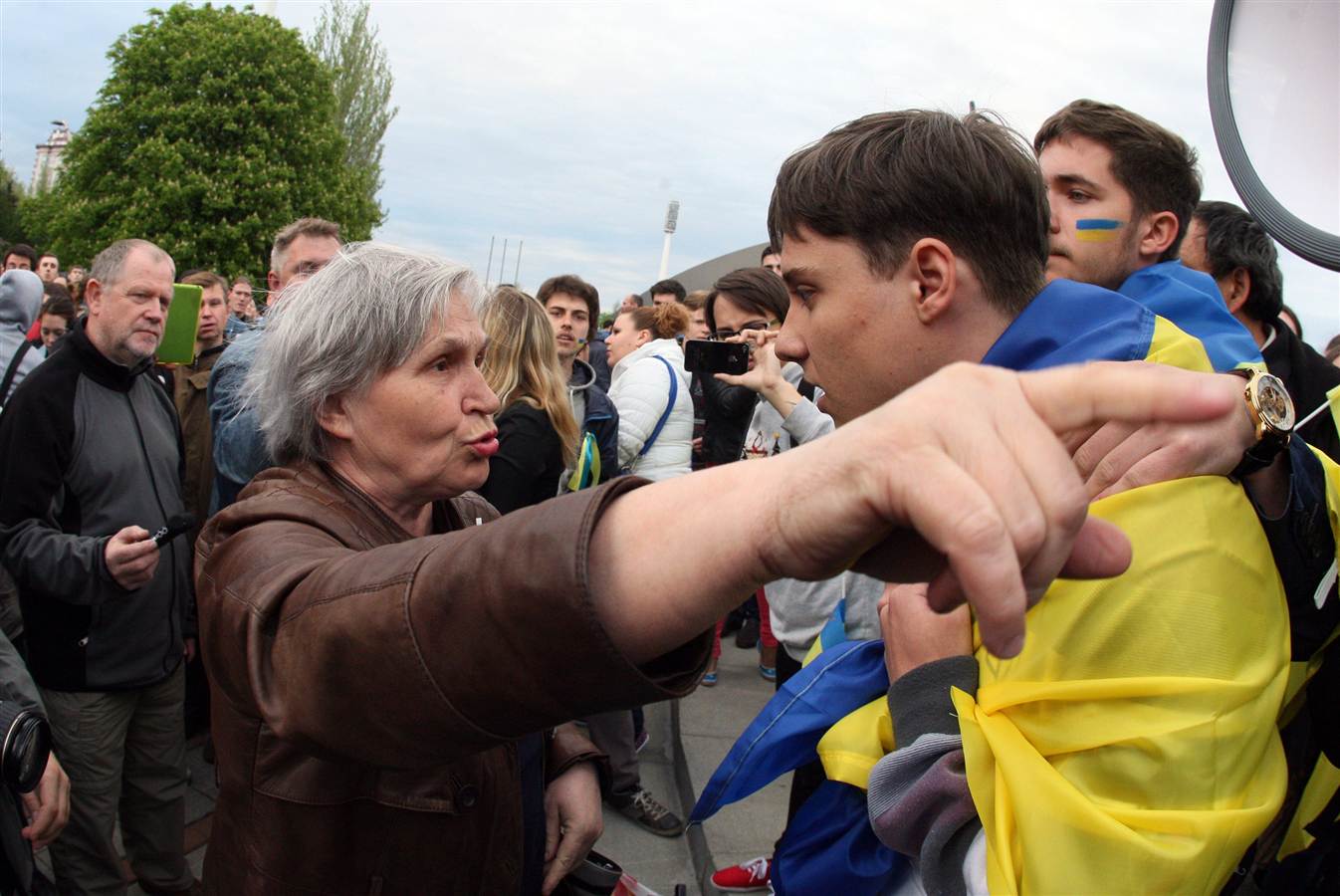
The “freedom-loving democrats” currently hijacking the apparatus of state in Kiev have given further testimony to their commitment to “our shared values”
by holding a parliamentary election on 26 October that flies in the face of all legal and constitutional norms.
Under the constitution, members of the Ukraine Rada (or parliament) are elected for a five-year term of office. Since this last happened in October 2012,
no general election is due until 2017. However in August Poroshenko dismissed the Rada, in contemptuous disregard of the constitution. Poroshenko’s
mouthpiece, Tsegolko, excused this act of dictatorship on the curious grounds that the majority of MPs had previously voted for “dictator-style laws,” and
called on “democratic forces” in the country to enter the early elections as a “pro-Ukrainian, pro-European” team. Thus, in the name of combatting
dictatorship, the parliament elected in 2012 was dissolved by order of the dictator Poroshenko. It will be remembered that this quisling “president” was
himself propelled into office in June by means of a no-less illegal presidential election, hot on the heels of the violent overthrow of the legitimate
government.
The passing of a so-called “lustration” law on 16 September set the seal of approval on a witch hunt which in practice was already well underway, with
fascist mobs roaming the streets and picking off politicians seen as too closely associated with Yanukovich’s Party of the Regions. The “lustration” (or
“purification”) act was copied from similar legislation adopted by the counterrevolution in the countries of the former socialist camp, aimed at hounding
anyone with even the remotest link to the previous government.
In the Ukrainian version, not only are all high-ranking officials holding office in the period of Yanukovich’s presidency facing dismissal, but even the
lowliest public servant or local government representatives will be subject to investigation. Singled out for particular opprobrium are former officials of
the CPSU, political instructors in the Red Army and persons “linked to political persecution of members of the Ukrainian national liberation movement
during World War II and in the postwar period” – i.e. anyone who stood firm against the nazi-collaborators and jew-baiters of the Ukrainian National Army,
whose home-grown version of fascism stunned even its German counterparts by the depth of its savagery.
The “lustration” bill had a remarkably bumpy passage through the Rada, considering the fact that most dissident voices had fallen silent in the prevailing
atmosphere of terror. Even so, the bill raised such qualms that it scraped through by only 5 votes, and then only after the Speaker announced that the MPs
could not leave the chamber until it had passed.
In the subsequent run-up to the election, the official “lustration” policy was complemented by an unofficial so-called “trash lustration”, in which
politicians of the wrong stripe were publicly humiliated, beaten up and dumped into rubbish bins. Over a dozen politicians and MPs were beaten up in this
period. The deputy head of Rovno’s regional council was binned for daring to cooperate with the Party of Regions, and then prevented from returning to the
council meeting. Similarly the head of the Ternopol regional administration was “trashed” for supporting the Party of the Regions. Radical Party chief Oleg
Lyashko, infamous for his abductions and torture of regional officials, led a mob which attacked an MP of the Kirovograd regional council. Right Sector
thugs shoved a former army commander into a bin for supposed “anti-Ukrainian behaviour and separatist attitudes”. An MP from the Economic Development Party
was attacked on the day the bill went through, whilst a mob screamed “Glory to Ukraine”. A former minister of emergencies, Nestor Shufrych, was beaten so
badly in Odessa that he was left with concussion and closed craniocerebral injury. One MP, Viktor Zhuravsky, tried to submit his documents to the Central
Electoral Commission. For his pains he too was seized by thugs and shoved into a rubbish bin.
Under such circumstances it is little wonder that fewer than 53% of the total electorate turned out to vote for anyone at all on 26 October. The Donetsk
and Lugansk People’s Republics took no part in the farce, instead awaiting their own elections on 2 November, whilst all anti-Maidan opinion in the west of
the country was effectively terrorised into silence. The role of reactionary mob violence, implementing at street level the “lustration” now enshrined in
law, made certain that only the “pro-Ukrainian, pro-European team” would be allowed to win.
Whether that team will much longer be fronted by the Poroshenko/Yatseniuk coalition, a coalition now under threat as the Kiev junta fails to break the
military stalemate imposed by the heroic anti-fascist resistance on the eastern front and the country heads into an unheated winter, remains to be seen.
Those who cheer on reactionary mob violence conveniently visited upon their political opponents today may find themselves in the bin tomorrow. Unease on
this point perhaps underlies the cryptic explanation from the Speaker of the Rada why Poroshenko himself should be exempt from “lustration”: “President
Pyotr Poroshenko is not falling within the ambit of the lustration law because he was elected by people at elections. Officials elected to their posts by
national vote are subject to self-lustration during the vote. In short, they do not come under the lustration law.”
The rock on which the Kiev junta may break is the steadfast resistance of the peoples’ republics on the eastern front and the diplomatic pressure exerted
by Russia. Fought to a standstill by a people’s war and pressed by Russia to deliver on the agreements arrived at in Minsk, Poroshenko is under challenge
even from his own prime minister, let alone from the insatiable fascist mobs to whom the “president” appears as a soft touch. Yatseniuk ran against
Poroshenko, and on election day went on television to denounce the Minsk proposals on a form of de facto autonomy for the peoples’ republics as “a bad
scenario”. Other voices are less guarded. Some outfit calling itself the “Committee of Patriotic Forces in Donbass” went on Facebook to fulminate that
“Poroshenko’s law on the ‘special status’ could be called a ‘law on capitulation’ or ‘law of assistance from the president of Ukraine to the terrorist
organizations of Donetsk People’s republic and Lugansk People’s Republic.'”
Worse for Poroshenko, it seems that in order to pass the necessary enabling legislation to implement the Minsk agreement, he might have to seek the support
of MPs formerly belonging to the Party of Regions and the Communist Party of Ukraine – i.e. the very MPs currently suffering “lustration” at the hands of
Right Sector, Svoboda and the rest. When a nervous General Prosecutor warned that there is a thin line between “trash lustration” and lynching, Odessa
militants planted a dustbin outside his office. A similar fate or worse may await the hapless chocolate king.
Victory to the anti-fascist resistance!