Victory to Iran!
In their arrogance, US imperialism and its Israeli sidekick thought they could ignore Iran’s warnings that, were it to be attacked, it was in a position militarily to ensure its aggressors lived to regret it. And sure enough, Iran’s retaliation after it was subjected to unprovoked bombing that led on the very first day, 28 February, to the deaths of 176 little girls at a school in Minab and shortly afterwards to the targeted slaughter of the country’s revered leader Ali Husseini Khamenei, was absolutely devastating.
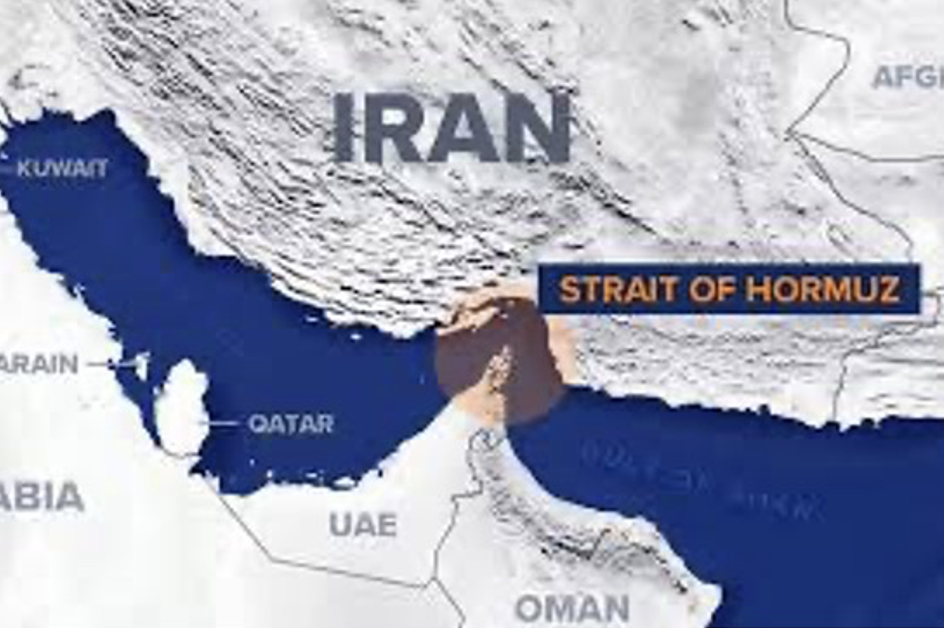
Immediately Iran’s precision strikes targeted high-value US installations in multiple countries, causing extensive infrastructure destruction beyond initial US disclosures. The Al Udeid Air Base in Qatar, a key US hub, suffered a direct hit, including runway destruction that halted operations temporarily as well as damage to hangars and command centres. Strikes at the US naval base in Bahrain damaged critical surveillance, communication assets, and radomes protecting radar systems. Bases in Kuwait, Iraq, and other Gulf sites suffered coordinated attacks across seven Arab countries that hit runways, aircraft hangars, munitions storage near Erbil (Iraq), and logistics hubs; a US Embassy compound in Baghdad lost a Giraffe 1X radar system to a kamikaze drone. Additional targets included air defence networks, aircraft shelters, and precision-guided systems that were overwhelmed by missiles, drones, and F-5 jets. All this had the effect of considerably degrading US military power in the region, as an estimated $800bn worth of assets, at least, were destroyed in just the first two weeks. On top of that, Iran naturally carried out its threat to restrict traffic through the Strait of Hormuz, which effectively closed down the supply of Middle Eastern oil to the world, sending the world price of oil soaring.
Despite the devastating losses, the big US bully continued to demand Iran’s immediate surrender and even ludicrously claimed victory several times. It made all kinds of blood-curdling threats, but was in the end obliged to hold up its hands to beg for a ceasefire (while falsely claiming that it was Iran that had asked for one).
Iran, on the other hand, though seeing its civilian population and infrastructure cruelly bombarded, was in no hurry for a ceasefire. It was able to bomb Israeli targets almost with impunity and continue its destruction of US military assets. Besides it had every reason not to trust either US imperialism or Israel who have more than once demonstrated that they take advantage of ceasefires to launch renewed assaults.
Pakistan was mobilised to deliver to Iran a 15-point US proposal for a ceasefire on 25 March. It read more like a proposal that Iran should surrender and was rejected outright with an Iranian official telling Press TV that Iran would only end the war when its own conditions were met. Iran then issued a 5-point counter proposal which included an end to US-Israeli attacks on Iran and on Hezbollah in Lebanon, security guarantees to prevent future Israeli and US aggression, substantial war reparations and international recognition of Iranian sovereignty over the Strait of Hormuz.
Nevertheless, hours after US president Trump had threatened “a whole civilisation will die tonight, never to be brought back again” unless Iran reopened the Strait, a 2-week ceasefire was secured on 8 April to allow the parties the opportunity to negotiate terms for the ending of the war. The major plank of the ceasefire was that Iran should immediately reopen the Strait for all shipping. The carrot held out to Iran was the unfreezing some of Iranian assets, estimated to total some $100 billion round the world, but nothing of the kind appears to have happened as yet.
Iran did in fact open the Strait to all commercial shipping only to have President Trump announce a blockade of the Strait that would prevent entry to any ship destined for, or emerging from, Iran. Needless to say, Iran immediately closed the Strait again to all except vessels from friendly or neutral countries willing to pay a hefty toll in cryptocurrency, renminbi or rials. With the US intercepting the ships that Iran would allow to pass, the result is that few ships are moving.
The effect of the closure of the Strait plus the blockade has been dire for every country in the world: Oil traders at Gunvor say the world has so far lost an accumulated 800-900 million barrels of oil supply, and as a result there has been a very steep rise in the price of oil, which has led immediately to a shortage of jet fuel, leading many airlines to cancel flights and substantially raise fares on those that remain. In addition, mobile phone operators have warned that they may be forced to ration phone signal and data speeds because of higher energy prices. Moreover, it is recognised that even after the Strait and access to it reopen, it will take months before oil supplies are able to reach their normal level.
It is not, however, only energy prices that are affected: “When the United States attacked Iran, it should have come as no surprise that Iran would blockade the Strait of Hormuz. Yet few could have foreseen the exact downstream effects: not just the worst disruption to oil supplies in history, but also shortages of materials that not many people realized they relied on — urea and ammonia used to grow the world’s staple food crops, helium for making computer chips and naphtha, a petroleum product crucial for the manufacture of many household plastic items, including garbage bags and water bottles” (Jamie Martin, ‘I studied the economic fallout from World War I. This could be worse than we expect’, New York Times, 8 April 2026).
Moreover, “Britain could face shortages of chicken, pork and other supermarket goods this summer if the war in Iran continues, a secret government analysis has found.
“Officials have drawn up contingency plans for a ‘reasonable worst-case scenario’ amid fears that the closure of the Strait of Hormuz will lead to shortages of carbon dioxide, which is critical to the food industry” (Aubrey Allegretti, ‘Britain preparing for food shortages as Iran war bites’, The Times, 15 April 2026).
In the meantime negotiations to end the stand-off are characterised by their absence since Iran refuses to negotiate while the US blockade remains in place. The two-week period of ceasefire has passed, so after threatening all sorts if Iran had not capitulated by the end of the two weeks, Trump announced unilaterally that the ceasefire would be extended:
“Hours after announcing that he ‘expected to be bombing’, the US president said he would extend the ceasefire until Iranian negotiators submitted a proposal for peace.
“’Based on the fact that the Government of Iran is seriously fractured, not unexpectedly so and, upon the request of Field Marshal Asim Munir, and Prime Minister Shehbaz Sharif, of Pakistan, we have been asked to hold our Attack on the Country of Iran until such time as their leaders and representatives can come up with a unified proposal,’ he wrote on his [manifestly outrageously misnamed] Truth Social platform” (Robert Tait, Jason Burke and Shah Meer Baloch, ’Trump announces extension of Iran ceasefire until “discussion concluded”’, The Guardian, 21 April 2026).
As is being pointed out by various commentators, this ‘neither peace nor war’ situation can be regarded as very advantageous to US imperialism as it cuts out virtually all Middle East oil supplies, giving the US a strong monopolist position, enabling it to charge extremely high prices to supply Europe and other allies, and leaving China struggling to maintain competitive production. It has even been suggested that this has been the result planned by US strategists all along. However, given that, on the one hand, US production cannot replace a large part of the lost Middle Eastern production and, on the other hand, this strategy cannot but unite almost the whole world against the US, it would be a completely Pyrrhic victory that will leave Iran no choice but to go back to the war that it has been winning in order to finish the job. In view of ongoing expansionist Israeli aggression in Lebanon and in Gaza, it is undoubtedly the case that the Israeli fascists need to be eliminated in the interests of justice and stabilising the whole region, a job which would appear to be within the capacity of the joint forces of Iran, Hezbollah and Yemen, especially since they will have the backing of, or can expect neutrality from, countries whose economies US imperialism is seeking to sabotage in order to promote its own interests. It seems unlikely that Iran will defer retaliation much longer, although it is undoubtedly the case that returning to war will exact a heavy price. Nevertheless, it should not be forgotten that US imperialism is running out of war materiel that it cannot replace in a hurry, so it cannot afford a long campaign.
The question also arises whether US imperialism would resort to using nuclear bombs on Iran to try to cow it into submission. This would undoubtedly trigger the start of World War 3 at a time when both US imperialism and its European allies are low on stocks of munitions and have developed no defence against Russia’s hypersonic weapons, thus making their cities sitting targets for nuclear retaliation. Even Trump has hastened to declare that the US will not be resorting to nuclear attacks.
We join virtually the entire population of Iran, as well as all those who are horrified by the continued suffering inflicted by Israel on the people of Gaza, the West Bank and Lebanon, in urging the Iranian government to please, if they possible can, GET IT DONE!