The war against Iran – pause or cessation?
Introduction – the war itself
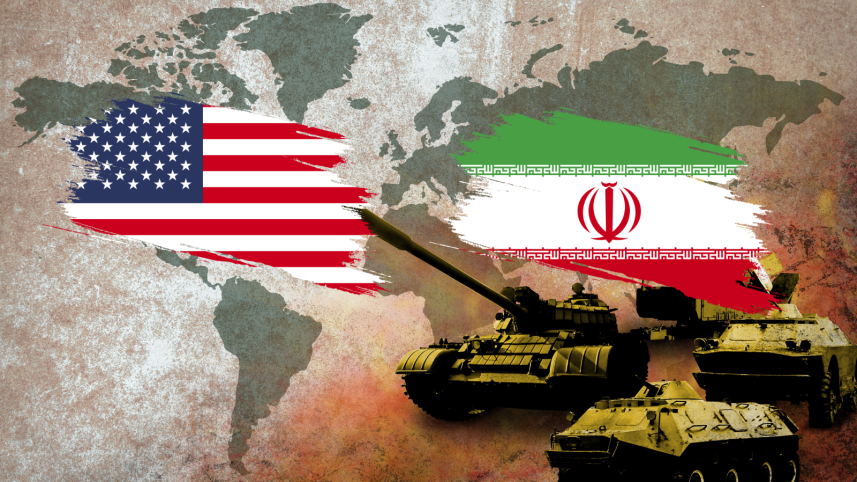
“War is the continuation of politics by other means” is the most famous axiom from Carl von Clausewitz’s foundational 1832 military treatise, On War. And when war pauses, the politics continue. The US/Israeli war against Iran has hit the pause button, at least temporarily, but where are we at with the politics, and how likely is it that war will once more soon erupt?
The war, though short, has been particularly brutal: “In its recent campaign against Iran, the United States dominated the skies using its traditional airpower. The US military pounded Iranian targets, conducting over 13,000 strikes. That prowess and devastating firepower did not stop Iran from hitting back. Over the course of the 39-day conflict that began on February 28 and stopped on April 8, Iran launched over 2,200 missiles and 4,400 drones against countries in the region. At least eight US aircraft were destroyed or damaged by Iranian attacks. Multiple US radars were hit, and seven US service members were killed” (Paul Scharre, ‘Losing the war of the future’, Foreign Affairs, 23 June 2026). And yet “at the time of this writing, the Iranian regime remains in place and maintains a stranglehold over the Strait of Hormuz. The United States has not achieved its objectives in the war, even though it is by every metric far more powerful than Iran” (ibid.).
As the Financial Times points out, the war has been a disaster for the US: “About a week into the US war against Iran, Donald Trump pledged that there would be no deal with Tehran except ‘unconditional surrender!’
“More than 100 days later, the US president is hailing a deal that underlines not only the Islamic republic’s capacity to withstand American-Israeli bombing but its newfound leverage from severely disrupting energy flows through the Strait of Hormuz…” (Andrew England and Neri Zilber, ‘Donald Trump settles for a truce of convenience with Iran’, Financial Times, 15 June 2026).
This failure of US imperialist ambitions does mean that the return to politics is no longer on quite the same basis as before the US’s ill-fated and unprovoked attack.
Most importantly, the US’s military stranglehold over the Middle East has been seriously weakened. Not only have its military bases been considerably incapacitated, but the various reactionary local puppets that were able confidently to strut around in their oppressive little kingdoms under its protection are now having seriously to consider their options:
“Washington’s allies in the Gulf discovered that hosting US bases, far from keeping them safe, made them targets for attack from Tehran. Soon afterwards, they found out that the expensive missile defence systems they had bought from US arms manufacturers were often inadequate in the face of cheap Iranian drones and other missiles.
“Washington’s friends in East Asia watched as the US moved more than 2,000 marines from Japan to the Middle East and removed a number of THAAD advanced missile defence launchers from South Korea. The moves reinforced a growing sense in the region that the US security guarantee there was increasingly shaky and that America’s allies needed to become more self-reliant….
“Washington ignored its allies’ interests as it pursued the war against Iran, bullying and threatening partners who refused to allow their territory to be used for an illegal campaign. As they become less dependent on the US for security, these allies are also likely to become more autonomous politically, economically and diplomatically” (Denis Staunton, ‘Lessons of Hormuz, Irish Times. 16 June 2026).
To what extent is Iran victorious?
There are those who imagine that because Iran has been victorious in forcing US imperialism to back down, therefore Iran is in a position to dictate terms to the US for the latter’s unconditional surrender, just as the Soviet Union and its allies in the Second World War imposed on the defeated Nazis. In this belief such people are now denouncing the Iranian government as traitors for returning to the negotiating table! One moment’s thought, however, would reveal the absurdity of such a position. We are not dealing with the situation that the USSR faced after its victories over fascism at Stalingrad and Berlin, where its Nazi enemy had been thoroughly beaten, its army had been broken, its cities had been bombed to smithereens, and final victory could be declared and the war criminals brought to justice. Iran’s enemy, US imperialism, has not seen a single bomb drop on its soil; its loss of military personnel is miniscule compared to the size of its army. Its weapons production facilities are still entirely intact, and it is still armed with nuclear weapons among other types of devastating weaponry. It follows that for Iran to come to terms with its enemy rather than to pursue the war willy nilly cannot be construed as a betrayal. But it is not a surrender, either, since Iran has not succumbed to the US’s war objectives.
Of course all progressive and humane people would like at very least to see US imperialist protégé, the racist apartheid genocidal state of Israel, wiped off the map as a result of its own encouragement of, and eager participation in, the war launched by the US against Iran, but it must not be forgotten than US imperialism is a million times more powerful than Iran and for the moment is 100% committed to securing Israel’s survival at any cost. It makes sense to let the newly-arising contradictions between Israel and its imperialist master develop and fester over time, which they are quite likely to do because Iran has been able to demonstrate that any failure of US imperialism to keep its attack dog under control will lead to the disruption of world trade, heavy blows to imperialist profiteering, hardships visited upon the populations of the US and US-allied countries that could lead to uprisings against their governments, etc. For the time being at least US imperialism needs to to rein in the aggression of its ferocious pet, however much that might infuriate the beast.
Fine cracks have already begun to appear in the US/Israel alliance which imperialism has always held sacred. The US President Trump was angered by Israeli intransigence in the face of his efforts to back out of the war that finally led on 17 June 2026 to the signing of the Memorandum of Understanding (MOU) with Iran that enabled the mutual suspension of hostilities:
“The apparent breakthrough came hours after Trump berated Israeli Prime Minister Benjamin Netanyahu following an Israeli strike against Hizbollah, the Iran-backed militant group, on Sunday in the southern suburbs of Beirut. Israel said it was responding after Hizbollah fired drones at northern Israel.
“The US president said the Israeli strike, which threatened to derail his push for a deal, ‘should not have happened’, adding that while Israel had a right to defend itself, the attack it was responding to ‘was very small and meaningless’” (Andrew England and Najmeh Bozorgmehr, ‘Iran and US agree deal to open Strait of Hormuz and extend ceasefire’, Financial Times, 14 June 2026).
The level of Trump’s rage with Israeli intransigence can be gauged by the fact that “Speaking at the G7 summit alongside the emir of Qatar, the US president said: ‘Without the United States, there would be no Israel. Without me, there would be no Israel, because no other president was willing to do what I did.
“’Israel would have been blown up a long time ago, had I not gotten involved’” (Emily Smith and Lily Shanagher, ‘Trump: There would be no Israel without me’, The Telegraph, 16 June 2026). All this is clearly indicative of how desperate US imperialism was to put a stop to the damage it was suffering under the blows being delivered by Iran.
The terms of the Memorandum of Understanding (MOU)
Mehr News released a short version of the 14-clauses of the MOU which we now reproduce.
1. The permanent and immediate halt of war on all fronts, including Lebanon.
2. A US commitment not to interfere in Iran’s internal affairs and to respect the sovereignty of the Islamic Republic of Iran.
3. The complete lifting of the naval blockade within 30 days.
4. A US commitment to withdraw its forces from the areas surrounding Iran.
5. The reopening of the Strait of Hormuz within 30 days under Iranian “arrangements”.
6. The suspension of oil sanctions, petrochemical products and derivatives, and Iran’s full access to the financial proceeds from them.
7. The requirement for the US and its allies to present reconstruction plans for Iran worth at least $300 billion.
8. Sixty days of negotiations to reach a final agreement based on nuclear issues and the complete lifting of primary and secondary US sanctions, as well as UN Security Council resolutions and resolutions of the IAEA Board of Governors.
9. Iran’s reiteration of its commitment under the NPT not to produce nuclear weapons.
10. During the negotiation period, the US has committed not to add to its forces in the region and not to impose any new sanctions.
11. The release of $24 billion of Iran’s frozen funds during the 60-day period of final negotiations. Half of this amount must be made available to Iran before the negotiations begin.
12. The formation of a supervisory mechanism to implement the agreement.
13. The final agreement will be approved through a UN Security Council resolution.
14. Final negotiations will not begin before half of Iran’s frozen funds are released, Iran’s oil sanctions are suspended, and the naval blockade is lifted. The final agreement will be limited only to the fate of enriched materials and enrichment, sanctions relief, and the programme for rebuilding Iran’s economy. Discussions about Iran’s missile programme and support for Resistance groups have been definitively removed from the agenda.
Of course, none of these terms becomes final unless and until a final agreement is reached – a far from certain conclusion. Nevertheless, as it stands it represents a major victory for Iran.
(a) To start with the US is agreeing not to pursue its regime change agenda:
“After the first military strikes that killed the supreme leader, Ayatollah Ali Khamenei, on February 28th, Trump urged Iranians in a televised address to rise up and ‘take over your own government’.
“… Iran’s population declined to heed the call…
“From would-be regime changer who promised demonstrators that ‘help is on its way’, Trump … has become the theocracy’s involuntary validator of its claims to rule.
“That role is rendered crystal clear by the memorandum of understanding (MOU) signed on Wednesday [17 June]. ‘The United States of America and the Islamic Republic of Iran undertake to respect each other’s sovereignty and territorial integrity, and to refrain from interfering in each other’s internal affairs,’ clause two of the text says, according to the readout provided by US officials, in language that appears designed to satisfy the regime’s desire for security guarantees…” (Robert Tait, ‘Trump’s Iran deal leaves him facing a Carter-like dilemma’, Irish Times, 19 June 2026).
(b) Secondly, as we have seen, the MOU has mightily angered imperialism’s attack dog, Israel:
Meir Litvak, a senior research associate at the Alliance Center for Iranian Studies at Tel Aviv University said:
“’We have an agreement imposed by the US, which gave too much to Iran in return to vague promises, and Israel is not only being humiliated, but is presented as the villain in the story,’ he added.
“Litvak predicted that ‘neither Trump nor any American president in the future will take serious measures against Iran, because the US suffered too many human and financial losses’ while ‘Israel’s position in the US is at the lowest point since 1948’.
“He added: ‘Israel will not be able to do anything vis-a-vis Iranian rearmament regarding missiles. Israel’s freedom of action against Hezbollah is severely curtailed, enabling Hezbollah to rebuild its forces for the next round. And, Israel has lost prestige and support among the Gulf Arab states’” (Denis Staunton, op.cit.).
And further: “The consensus in Tel Aviv and Jerusalem is that this is a bad deal for Israel, one that leaves it potentially worse off than before the war, with a strengthened, enriched and emboldened enemy in the Islamic Republic and a failed opportunity to harness unprecedented American support.
“’The treaty of Versailles was less humiliating,’ the popular talk show host Chaim Levinson wrote on X” (Gabriella Weiniger, ‘”A diplomatic October 7”: Israelis across the spectrum denounce deal’, The Times, 18 June 2026).
(c) There is no requirement for Iran to destroy or decommission its remaining missile stocks, bases and manufacturing capability, which leaves Iran free to continue to defend itself even if the ceasefire agreement is fully implemented and becomes permanent.
(d) Although Trump boasted of destroying Iran’s naval forces, there is nothing in the agreement to prevent it from rebuilding them, especially if it secures the return of its $25 billion in illegally blocked assets and the lifting of the unjust and improper sanctions to which imperialism has subjected it.
Will the ceasefire hold?
As we have noted above, Trump has been very anxious to extract the US from a war it was losing (while of course pretending the ceasefire was the result of his brilliant negotiating skills!). No doubt Iran also welcomed a respite. However, the antagonistic contradictions that brought the two sides to war have certainly not been resolved, not in the slightest. Many people believe that Trump’s commitment to the ceasefire will end after the midterm elections on 3 November in which his side was expected to fare badly if at the time the US was still embroiled in losing a very unpopular war that has been causing considerable harm to the US population and economy as a result of the blockade of the Strait of Hormuz.
Immediately, however, the weakest link was Lebanon. “The preliminary agreement between Iran and the United States had barely come into effect when it all nearly unraveled on Friday [19 June – a merely 2 days after the ceasefire was agreed]. And, for the second time in recent weeks, the issue that threatened to derail it was Lebanon” (Euan Ward and Christina Goldbaum, ‘Lebanon emerges as weak link in US-Iran deal to end war’, New York Times, 19 June 2026).
Israel, not a party to the ceasefire agreement (any more than was Hezbollah) continued its aggressive assault on Lebanon: “Hezbollah said it had ambushed Israeli troops advancing on a hillside overlooking Nabatieh, the large southern Lebanese city, in fighting that killed four Israeli soldiers, according to the military. Israel responded with more than 150 strikes across southern and eastern Lebanon, killing at least 47 people, according to Lebanon’s health ministry” (ibid.).
After some debate as to whether the MOU covered the situation at all, the Iranian side made it clear that the ceasefire covered all the theatres of the war, including Lebanon. When Israel refused to accept the terms of the ceasefire and carried on its assaults in Lebanon, thereby putting it seriously at risk, Trump was furious: “After Trump urged Binyamin Netanyahu to be ‘more reasonable’, Vance lashed out at Israel on Thursday night, saying: ‘You can’t just kill your way out of solving every single national security problem that you have’” (Samer Al-Atrush, ‘Israeli airstrikes in Lebanon derail US-Iran peace talks’, The Times, 19 June 2026). Trump told Netanyahu, “you don’t have to knock down a building every time someone walks into it that’s from Hezbollah”. As a result a ceasefire between Hezbollah and Israel was immediately agreed. Yet on 20 June, Israel once again struck, this time in Nabatiyeh, where 16 people were killed and 12 more were injured. Israeli warplanes hit Nabatieh al-Fawqa shortly after midnight, before strikes on the town of Arabsalim later in the morning killed three more people. The execrable mass murderer Ben Gvir commented: “For every tear of an Israeli mother, a thousand Lebanese mothers must weep,” even though any Israeli soldier killed is doing so in an act of aggression against a foreign country!
Further Israeli aggression in Lebanon, however, appears to have halted for the time being. It is possible Trump has threatened to stop arms shipments to Israel if it does not toe the line, but if he has, this has not been reported.
But the problems haven’t ended there.
The Strait of Hormuz remains a bone of contention. Its ability to close this vital waterway to all shipping is one of the most powerful weapons in Iran’s arsenal. And despite the agreement that it will be reopened to all shipping, Iran still retains certain rights that US imperialism is trying to deny:
“While Trump insists that the strait is ‘wide open’ for traffic, Iranian officials have reiterated that any transit through it must still be coordinated with Iran’s Islamic Revolutionary Guard Corps (IRGC) and follow a route close to Iran’s coast…
“Historically, a transit through the Strait of Hormuz, which flows through the territorial waters of Iran and Oman, has been free of charge. Since the war began, however, Tehran has stated that this will not continue.
“Under international law, tolls may not be charged through natural straits, such as Hormuz, even if they are not in international waters. However, it is permissible for adjacent states to charge fees for ‘services’ rendered to shipping passing through, such as insurance or docking” (Yashraj Sharma, ‘Strait of Hormuz reopens, but can ships’ safety be assured?’, Al Jazeera, 17 June 2026).
This means that despite the MOU ships cannot pass through the Strait without co-ordinating their passage with Iran. But on Thursday 25 June, the Singaporean-flagged container ship Ever Lovely, attempted to slip through, using a route hugging the Omani coast, without informing Iran. Unsurprisingly it was attacked by Iranian drones, whereupon the US responded by “target[ing] Iranian military surveillance infrastructure, communication systems, air defence sites, drone storage facilities and minelayer capabilities.
“’United States aircraft just struck Iranian missile and drone storage locations, and coastal radar sites, for violating the Cease Fire Agreement, AGAIN!’ Donald Trump posted on Truth Social…
“Iran’s Revolutionary Guard Corps hit back within hours, saying in a statement early on Sunday [28 June] that it had carried out missile and drone strikes targeting eight US military installations in Kuwait and the US Navy’s Fifth Fleet in Bahrain” (Aime Williams, Najmeh Bozorgmehr, Andrew England and Neri Zilber, ‘US and Iran exchange strikes as ceasefire falters’, Financial Times, 27 June 2026).
As we go to press, we are unable to say whether Trump will back down or the ceasefire will collapse.
Unresolved issues
Even if the ceasefire were to survive and an acceptable agreement reached after 60 days, there are two long-running sores that are not addressed. These are Lebanon and Gaza.
“The Israeli military is expanding its illegal occupation of Palestinian, Lebanese, and Syrian land even further.
“Since October 2023, Israel has taken control of an additional 1,000 sq km of territory —bigger than the entirety of New York City — that stretches across Gaza, southern Lebanon, and southern Syria.
“As new borders are drawn, millions remain forcibly displaced…
“Just this week, the Israeli military shot and killed 3-year-old Rayan Abu al-Ajeen while he was being carried by his father in central Gaza — not in the officially-occupied ‘Yellow Line’ zone, but in an area where Israel is supposedly not in direct control. Rayan is one of over 1,000 Palestinians killed by the Israeli military since the so-called ‘ceasefire’ took effect in October 2025” (Jewish Voice for Peace, ‘A land grab the size of NYC’, The Wire, 18 June 2026).
Lebanon
Although Trump may have required Israel to hold its fire for the time being the fact is that the IDF is still in occupation of large swathes of Lebanese territory and still hopes to be able to wipe out Hezbollah.
“Israeli attacks on Lebanon have killed over 3,800 people since March, forced 1.2 million people to flee their homes, and reduced entire villages to rubble. It has carried out the same genocidal tactics that it used to decimate Gaza, including targeting hospitals, killing medical workers, and using ‘double-tap’ strikes. The Israeli military has made at least 800 incursions into Syrian territory since December 2024, erected military outposts, demolished civilian homes, displaced entire families, and carried out random arrests” (ibid.). This is not a situation that can be allowed to continue. Israel is hoping to mobilise both the Lebanese government and the lunatic Syrian government to help it in its ambition to wipe out Hezbollah and turn Lebanon into a client state. But it is the people who make history, and it is pretty certain that the overwhelming masses of the Lebanese people are with Hezbollah, not the Lebanese government, and that the puppet Syrian regime will rapidly meet its much deserved downfall if it tries to mobilise Syrian people to fight Israel’s wars.
Palestine
The world’s attention has been drawn away from the plight of the Palestinians both in Gaza and in the West Bank while the Iran war was going on. However, the Zionists continue ruthlessly to pursue their policy of culling the Palestinian population:
“A UN report released on Tuesday [23 June 2026] accused Israeli security forces of abuse and deliberate killings of Palestinian children eight months after Israel and Hamas reached a truce in the Gaza Strip.
“The report was compiled by an independent commission of three senior international jurists who investigated the violence. It concluded that the killings were part of a strategy to destroy the future of Palestinians in Gaza and said that this amounted to genocide.
“The commission also documented killings of Palestinian children by Israeli security forces in the occupied West Bank, which it said were war crimes…
“’Even after the October 2025 cease-fire, children continue to be killed and seriously injured, with continued disregard by Israel for the cease-fire and for the protection owed to Palestinian children under international law,’ the commission chairman, Srinivasan Muralidhar, said in a statement.
“’The protection, care and survival of Palestinian children are inseparable from the Palestinian people’s right to self-determination,’ he added. ‘By targeting children, Israel is attacking the very capacity of the Palestinian people to exist and to determine their future.’…
“One Palestinian child has been killed on average every day since the start of the cease-fire, the U.N. children’s agency, UNICEF, said last week.
“’They were killed in their homes, in their schools, playing football, fishing. They were shot, bombed and hit by airstrikes,’ said James Elder, a UNICEF spokesman. He called the truce a ‘cruel and deadly illusion’” (Nick Cumming-Bruce, ‘UN Report says Israeli killings of Gaza children post-truce amount to genocide’, New York Times, 23 June 2026).
In the light of the above, how can anybody fail to pray for the dismantling of the fascist, Zionist state of Israel as soon as possible. Should the ceasefire break down so that there is a resumption of war, the final smashing of the IDF would be an outcome much to be hoped and prayed for.
Conclusion
The world is in revolt against imperialist tyranny. As its permanent economic and financial crisis drives imperialism to ever more egregious acts of violence against the masses of the people, so the latter are driven to stronger and stronger acts of rebellion and resistance. At the end of the day only the complete overthrow of the capitalist system of production that creates the economic and financial crises that drive the imperialists to such destructive acts of madness can bring permanent relief – with the only viable alternative to capitalism being socialism – i.e., a fully planned economy aimed exclusively not at the profits of the few but the fulfilment of the needs of the many.
Of course, the billionaires of this world, the kings of finance capital, will mobilise all their wealth to try to protect their world of stupendous privilege, but their days are surely numbered. It is already clear that US imperialism, for all its huge and unparalleled wealth, can no longer expect to have its own way in war, as the Iranians have comprehensively demonstrated – even more so than the Koreans, the Vietnamese and the Afghans have done before them. In the future, its decline is even more assured:
“The conflict with Iran was the United States’ first taste of a new era of warfare. Emerging technolo-gies are leveling the playing field between Washington and its adversaries. The diffusion of afforda-ble drone technology and artificial intelligence capabilities is allowing smaller states and nonstate actors the chance to punch above their weight. Such adversaries can now hit US rear bases, inflicting casualties and damaging expensive US aircraft. Iranian missile attacks on US bases in the Gulf de-stroyed one E-3 Sentry early warning aircraft. That loss is even greater than the airplane’s $300 mil-lion cost, since the US fleet of E-3 aircraft is now down to only 15 and a replacement program is years away. Iranian missiles struck five KC-135 Stratotanker refueling aircraft, as well as multiple US ground radars.
“Drones have transformed not just the dynamics of warfare but also its economics. In the Gulf and elsewhere, low-cost air and naval drones and missiles can take out far more expensive assets. …. A $300,000 drone boat can cripple a navy warship that costs hundreds of millions of dollars” (Paul Scharre, ‘Losing the war of the future’, Foreign Affairs, 23 June 2026).
In the end, not all the wealth and power of the now redundant ruling classes can hold back the historical mission of the proletariat to seize control of the means of production out of the grasping hands of the bourgeoisie and through socialism to initiate a new era of humanity, free of its 10,000 year old class divide, free also of war, when at last it is possible for humanity to lay claim to true civilisation.