The commodification of education
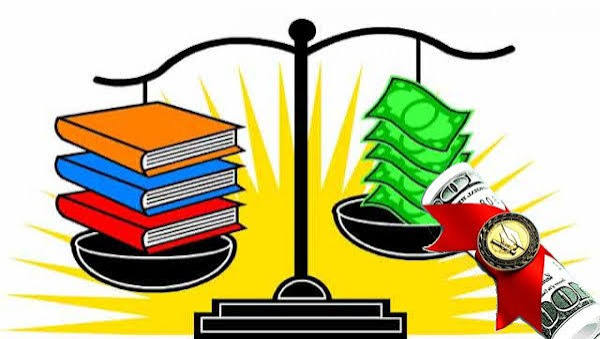
Karl Marx defined a commodity as something that satisfies a human need but that becomes a commodity when it is produced for sale or exchange. Education satisfies a human need but under capitalism, it has increasingly been turned into something to be bought and sold for profit. What was once regarded as a public service and a right, has become a market-driven product that is bought, sold and consumed.
In a planned economy under socialism, production would be organised around satisfying the needs of the people: homes, energy, nutritious food, healthcare, education, culture, recreation and so on. Under capitalism, the priorities are different. Capitalists do not care whether the population has the necessities of life; there is no coordination to ensure that society’s needs are met. Each capitalist plans his own production around a single motive: profit!
Since the 1970s we have seen a steady degradation of the necessities of our lives. The privatisation of energy, transport, housing, health, social care and education, to name but a few, have made us significantly worse off whilst fat-cat capitalists continue to amass more profit, more capital! The wealthiest 0.001 percent alone – fewer than 60,000 multi-millionaires – control three times more wealth than half of humanity combined, and their share has grown steadily from almost 4 percent in 1995 to over 6 percent today – whilst we have become more indigent.
You’ve heard of the boiling-frog metaphor, which cautions us to be aware of gradual change lest we suffer its eventual consequences. Well, that metaphor is particularly apt to the decline in workers’ material conditions over the decades. Slowly, our public assets have been sold off, our wages frozen, our communities dismantled, and our housing, education and healthcare privatised.
It happens so gradually and imperceptibly that we barely notice. Each change is ‘sold’ to us as a reasonable development so we offer up no resistance and accept it silently. The problem is that it continues relentlessly until we are stripped, beleaguered and utterly exploited, with nothing left except a fading memory of how things used to be better than they are now.
Education provides a perfect illustration of how this process works. Despite university education once being free for us, we have come to accept not only that our children should become indebted for decades to receive an education, but that the quality of their education and their opportunities for secure employment should decline at the same time.
Right in front of our eyes
Remember the effusive response to Tony Blair’s 1996 declaration: “Ask me my three main priorities for government, and I tell you: education, education, and education.”
The slogan became a defining mantra of New Labour’s 1997 general election campaign. It evoked an image of progressive investment in our children and their potential. Yet the policy that followed aligned with the Dearing Report, commissioned by the previous Tory government under John Major, and marked a further shift towards the neoliberal restructuring of higher education.
Following the publication of Dearing’s report in 1997, Blair introduced annual tuition fees of £1,000, framing them as necessary to fund the expansion of higher education. Student maintenance grants were abolished in favour of loans, shifting an increasing share of the cost of education from society onto the individual.
While “education, education, education” sounded like a promise of public investment, what followed was the erosion of universal free access and the accelerating commodification of education: students became customers, degrees became products and universities increasingly behaved like businesses, competing for revenue, rankings and brand value.
Over the next three decades parents and students were misled and lied to. After being sucked into the idea that £1,000 was a small and acceptable investment in tertiary education for all, we capitulated to the premise that a future for our children required a university education and it would inevitably come with debt. Here’s how the ‘education’ frog was boiled.
1997 – Dearing Report
Tuition fees of £1,000 per year were introduced and maintenance grants were progressively replaced by loans. Higher education was increasingly presented not as a social good, as it should be, but as a private investment in an individual’s future earning power.
2004 – Higher Education Act
The Higher Education Act 2004 enabled tuition fees to be trebled to £3,000 a year. Variable fees introduced differentiated pricing and laid more of the groundwork for the student-as-consumer model.
2010 – Browne Review and the Cameron-Clegg coalition
The Browne Review proposed further marketisation of higher education. The coalition government subsequently raised the maximum tuition fee to £9,000 a year, implemented from 2012, while dramatically reducing direct state funding. Universities became increasingly dependent upon income ultimately financed through student debt. What this ultimately did was generate a cash cow of profit by transferring millions of public funds to the private sector whilst fooling working class students that they could improve their fortunes with a graduate education.
2017 – Higher Education and Research Act
The Office for Students was created as the regulator, new private providers were given easier entry into the higher-education market, and the Teaching Excellence Framework helped formalise the measurement and ranking of universities according to market-oriented metrics.
2020s – The market model matures
Currently just over £21 billion per year is loaned to around 1.5 million higher education students in England. The value of outstanding loans at the end of March 2026 reached £295 billion. The government forecasts the value of outstanding loans to reach around £500 billion (2025/26 prices) by the late-2040s. The average debt among borrowers who finished their course in 2023 was £47,900 when they first became liable to repay this debt (April 2026)..
Universities compete for customers, build brands, commercialise intellectual property and increasingly operate like corporations, while academic labour itself has become increasingly casualised. In the space of three decades, whilst we all watched from the sidelines – there’s that frog metaphor again – education shifted from a public service intended to develop our children and afford them the opportunity of a brighter future into a personal financial investment for competing in an increasingly precarious labour market. The only thing guaranteed is the debt.
Public money, private profit
The important point is that public money still funds education. The difference is that instead of that money being used to provide free education, it is channelled through an increasingly commercialised system while students themselves are saddled with decades of debt. We have seen the same process in healthcare: public money pours into the NHS, but increasing amounts are siphoned off through outsourcing to private companies, PFI contracts and a system in which hospitals are expected to operate according to financial rather than purely clinical priorities. We constantly hear that there is ‘no money’ and wonder where all our taxes go, well now you know! Vast sums of public money have not disappeared; they have been redirected through systems designed around markets, contracts, debt and profit. Once profit rather than human need becomes the driving force, more and more money is consumed by capitalist profiteering while the services themselves deteriorate.
Winners and losers
The commodification of education has created a web of direct financial beneficiaries, none of whom belong to the working class. The number of graduates produced annually has increased almost tenfold, from just over 50,000 a year in 1970 to nearly 477,000 first-degree graduates in 2024/25. That enormous expansion raises an obvious question: who has actually benefited?
The winners
Private education companies and publishers profit at virtually every stage of the education process: from university fees, textbooks, digital content and learning platforms to assessment tools, qualifications and the administration of examinations.
The British multinational Pearson provides a useful example of how education itself has become a source of private profit. The company makes money from educational content and digital learning platforms as well as assessments and qualifications, including GCSEs and A-levels, while its professional assessment business administers more than 18 million certification and licensing exams each year.
And the rewards are substantial. In 2023, Pearson generated sales of £3.67bn and an adjusted operating profit of £573m. In 1997, the company reported group operating profit of £323.2m. Its reported operating profits have therefore increased by around 77 percent in nominal terms over those 26 years. And that’s just one of the winners from the commodification of our education.
Then we have the financial institutions. Student loans have themselves been turned into financial assets. In Britain, tranches of student loan assets were sold to private investors, transferring another aspect of what had once been public provision into the financial marketplace.
And let’s not forget university management and private contractors. The commodification of education has proved extremely lucrative for those at the top of universities themselves: vice-chancellors routinely receive remuneration packages exceeding £200,000 a year, with some approaching half a million pounds.
Finally there are the private companies running accommodation, catering and campus services, university-affiliated property developers profiting from student housing, and private landlords charging exorbitant rents to students. And the usual hangers-on: large consultancies paid to ‘reform’ education systems and the various organisations providing the management, accreditation and other ‘expertise’ associated with an increasingly marketised education system.
The losers
We appreciate it doesn’t need spelling out but for the sake of completeness, we will. The losers are the ever-growing young proletariat: working-class kids who, far from being raised to a higher level of economic prosperity, emerge indebted, underemployed, repressed, depressed and increasingly without hope. What used to be free because it was regarded as a public investment in the next generation has become that generation’s personal financial burden. And what of the product they have bought?
The proliferation of degree-level education
There has been a proliferation of degree-level education and qualifications. Where a university degree was once obtained by a relatively small minority, higher education has been transformed into a mass market, producing hundreds of thousands of graduates every year with an enormous expansion in postgraduate study. In 1950, just 17,300 first degrees and 2,400 higher degrees were awarded by UK universities. By 1991, 161,500 first degrees were being awarded annually; by 1999/2000 the figure had reached 265,000, and by 2016/17 it stood at 414,000. In 2010/11 alone, UK universities awarded 331,000 first degrees and 182,600 higher degrees. The total number of students in UK higher education likewise increased from around 1.1 million in 1990/91 to 2.66 million by 2010/11. In other words, within a generation higher education was transformed from something undertaken by a relatively small section of the population into a vast industry producing degrees, graduates and, increasingly, debt on an industrial scale.
The contradiction is glaring. We are producing vastly more graduates, charging them vastly more for becoming graduates, yet failing to provide the secure graduate employment that supposedly justifies the investment and ultimately benefits our society – the purpose of education.
More graduates, fewer opportunities
In June 2026, one in ten students graduating from university said they were planning to emigrate in search of better job opportunities. High Fliers, the graduate recruitment research company, described 2026 as probably the worst time in the last 30 years to be leaving university. But if you’ve been following along, that should not be a shock.
In April 2025, young people told the BBC they were finding it harder than ever to get a job, with some graduates expressing frustration at being turned down even for roles in supermarkets.
Go further back and the story is remarkably familiar. In 2020 the headline screamed “The Class of 2020’s Uncertain Future”. In 2016 there was another reported downturn in graduate opportunities. In 2011, graduate unemployment had reportedly risen to its highest level since 1999. As far back as 2003, the BBC was reporting graduates facing a tougher job market and a mismatch between qualifications and available opportunities.
So, for more than 20 years we have been hearing about shortages of suitable graduate employment yet the capitalist system continues to drive young people into tertiary education regardless. A resounding indictment of a system whose interests are fundamentally profit-based driven by successive governments whose interests are clearly commercial.
Meanwhile, the debt remains
For those who started university in 2022, average lifetime repayments have been estimated at around £56,000 in today’s prices, compared with average initial borrowing of around £48,000. Those among the highest-earning half of graduates can expect to repay around £74,000, paying back considerably more in real terms than they originally borrowed because of the interest accumulated on their loans.
And government can quietly extract still more. Freezing student-loan repayment thresholds means that as nominal wages rise, an increasing proportion of graduates’ incomes becomes liable for repayment. The graduate doesn’t receive any more education or any better service; more money is simply extracted from their wages and is ostensibly another form of taxation. As a recent Times article suggests, “Despite the student loan operating much more like a tax than a traditional loan, the mental anguish of making monthly payments only to see their debt pile rise is dragging young people down.” But then debt has another useful function for capital. It produces indebted workers whose material circumstances encourage compliance. A young worker entering adult life owing tens of thousands of pounds, needing secure employment to pay rent or a mortgage and knowing that future employers can scrutinise his or her public profile has rather more to lose by becoming politically troublesome. And with war plans looming, the advantages are clear.
The next turn of the screw
And now the narrative is changing again. Having spent decades telling working-class youngsters that university was the route to prosperity, the government is suddenly telling us that too much emphasis has been placed on degrees and that more young people should be directed towards apprenticeships and vocational training. At precisely the same time, youth unemployment and ‘economic inactivity’ are increasingly being presented as an intolerable burden on the welfare budget, with government determined to move young people off benefits and into work. And waiting conveniently among the new apprenticeship and employment opportunities are the armed forces. The Ministry of Defence and Department for Work and Pensions are already working together to direct benefit claimants towards military careers, with the government stating that there will be a ‘particular focus on younger customers’. The armed forces are meanwhile being promoted as Britain’s largest apprenticeship provider, offering more than 100 apprenticeship programmes and taking on more than 13,000 personnel for recognised qualifications each year.
Here’s that boiling frog again. Yesterday our children were told they needed a degree, so they were funnelled into an education market that left them tens of thousands of pounds in debt but increasingly without the jobs their qualifications supposedly promised. Today they are being told we have placed too much emphasis on university, that apprenticeships are the future and that young people cannot be allowed to languish on welfare. No one is suggesting – yet – that youngsters will be given the stark choice of joining the armed forces or losing their benefits. But the pieces are quietly being put in place: reduce access to welfare, make employment increasingly conditional, redirect young people towards apprenticeships and vocational training, and simultaneously position the armed forces as a major provider of both.
Whether they leave university indebted and desperate for secure employment or bypass university altogether and find themselves compelled to take whatever work and training is available, the direction of travel for working-class youth is becoming increasingly clear. Capital requires cheap workers in peacetime and soldiers in wartime, and our children are being prepared to provide both.
Education underpins a prosperous planned economy
It makes perfect sense that a planned economy – organised to provide the fundamentals of a satisfying life for everyone – would identify the skills society needs and plan tertiary education accordingly. How many doctors, nurses, engineers, teachers, scientists, builders and other skilled workers will society require? What skills will be needed to build homes, provide healthcare, produce food, develop industry, advance science and enrich our cultural lives? Education can then be organised to meet those needs rather than universities inventing and marketing products to customers because attracting more fee-paying students generates more profit.
If we want a society worth living in, education should be high-quality, free, universal, lifelong and publicly provided, equipping people for meaningful employment that meets the needs of society as a whole. Profit-taking has no place in our classrooms. The fact that profit has become a driving force in education is precisely why we are where we are today.
Class consciousness is our salvation
The commodification of education has turned a public good into a site of capital accumulation, just as capitalism has done with every other public asset, service and institution. It doesn’t matter who is in government as illustrated by Blair’s Labour Party adopting the Dearing report commissioned by the previous Tory establishment; it is the capitalist class that runs the system, and it runs it in its own class interests.
This article may have focused on education, but only to illustrate how the degradation of the quality of our lives is planned, implemented and continued by successive governments in accordance with the laws of capital. The commodification of education, of our lives, of us, will inevitably continue –because that is inherent in the system of capitalism – until we decide to replace this moribund pernicious self-serving economic model with one that is planned to provide for the needs of all workers – socialism!