Obituary for Billy Hunt-Vincent
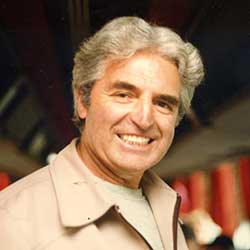
Death of a fine comrade
Billy was born on the 12th July 1930 in Spring Garden Lane in the ‘Town End’ of Sunderland, where he lived with his mam and dad, Liz and Nicky and his
older sisters. They lived in two rooms of what can only be described as a slum, a fact which Billy never shied away from: he was proud of where he came
from. They didn’t use the back room for living in, as there was a crack in the wall so big you could see the shared tap in the yard outside. Before he was
one year old, Billy contracted pneumonia and his mam was told by the doctor to let him ‘sleep away’ as nothing could be done. Having lost two children
already, Liz wasn’t going to let that happen and borrowed the money to buy some medicine, eventually nursing Billy back to health. Her strength and
determination and love for her bairns was to have a lasting impact on Billy’s life.
When he was four, the family, now including his baby brother, moved to the newly built council estate of Marley Potts in 1934. Billy remembered this being
like ‘going to paradise’, having a proper house of their own with a garden and surrounded by fields: a far cry from the slums of Sunderland’s east end!
Despite the fact they had nowt, his mam always made sure they had boots on their feet and food in their bellies, unlike many of his contemporaries. Billy
always remembered the happy times growing up in Marley Potts: his mam’s wonderful cooking and the strength with which she looked after her family in the
difficult days of the ’30’s.
The family continued to grow and soon Billy had three more brothers. Sometimes they exasperated him when he was off being one of the ‘big lads’, but he’d
always step in and fight anyone who threatened his brothers and they grew up a tight-knit and loving family.
Billy passed his 11 plus and won a place at Monkwearmouth Central School, initially he didn’t take up his place as the cost of a uniform was prohibitive.
News of his achievement soon spread round the estate and his mam was finally persuaded to send him to the school after a visit from a neighbour: a Boer War
veteran who felt Billy, having earned his place, deserved the opportunity to benefit from it. Money for a school cap was found and this ‘uniform’ was
accepted by the school! Billy developed a lifelong love of reading and eventually, through much cajoling, persuaded his mam to let him have a library card:
which was a big responsibility as any lost or damaged books would have to be paid for. Billy left school at 14 and served his time as a blacksmith with the
River Wear Commissioners. These were tough times during the war and with his dad away in the army and his sisters working as part of the war effort, Billy
took on the responsibility of bringing some money into the household.
Billy worked as a chain-maker on the docks: maintaining the chains was a job that had to go on despite the weather and he was often called on to retrieve
damaged chains from the top of the dock cranes in snow and howling gales. It was tough work and he was equal to the task.
Though not a popular pastime in the 1950’s, Billy became interested in weightlifting: the start of a lifetime interest in health and fitness. Through this
he met Nick Rowell who opened Billy’s eyes to politics and helped his nascent political and social views to coalesce into a firm-held and passionate belief
in social justice. They were part of a group of likeminded mates who would swim in the North Sea in all weathers: diving off the pier and swimming across
the bay. They would then play handball or football on the beach to warm up. On one such occasion a mate of Billy’s left his trunks on the sea wall to dry
and when he came back they were frozen solid and stuck to the stone! In 1958 Billy won a medal for his weightlifting, being crowned North East Strength
Champion in the ten stone class.
Billy’s political views lead him to join the Communist Party in 1959 and he became involved in trade unionism: working as a shop steward he fought
tirelessly for decent working conditions (a subject he wrote about in his semi-fictitious novel ‘Shed no Tears for the Defeated’ which was published
earlier this year). Billy stood as a Communist Party candidate for Sunderland Council in 1968 and again in 1973. When the CPGB split in 1977 he and his
friends in Sunderland joined the NCP not wanting to move away from their original beliefs. [Billy went into the NCP in the belief that it represented a
revolutionary alternative to the CPGB’s revisionism. Experience over a number of years showed him, however, that the NCP, because of its incurable and
cretinous support for social democracy, was no better. Being totally disillusioned and disgusted by the NCP’s political line, he joined the CPGB-ML and,
although in failing health, helped it in every possible way he could, especially by sending his poetry to be published in the Party’s journal or the
fraternal paper, LALKAR. He was interviewed by Ranjeet Brar on behalf of the CPGB-ML; that interview will shortly be appearing on Proletarian Television.
Like his family, we too, members of his extended family, will sorely miss him – Editor].
He was a well-known figure in the trade union movement, serving on the Sunderland Trades Council and never lost his passion for championing the rights of
working people or his belief that if we all pulled together to fight for a better world we could achieve a fairer and more balanced society.
Billy married Londoner, Pat Cattermole in 1967, whom he’d met on holiday in Bulgaria, and in 1968 the first of his two sons, Bob, was born with Will
arriving two years later. The boys were a great source of pride to him and he strove to pass on his passion for social justice to them as well as
encouraging them to make the most of their education and strive for a better life.
During his life Billy embraced many hobbies, including oil painting and writing and had a number of letters, articles and poems appear in various
publications over the years. He also had a love of music ranging from the popular songs of his childhood, through folk music to classical: especially the
great Russians composers of the 19th Century.
Billy’s love of travel lead him to visit what would have been considered at the time as some very exotic places and he became a tour guide for Yorkshire
Tours, leading coach loads of tourists to Moscow, Leipzig, Dresden, Leningrad, Prague and Budapest.
During the Miners’ Strike, Billy actively supported the NUM on the picket line and at meetings. He continued to have a strong empathy with the miners,
attending Durham Miners’ Gala many times over the decades.
In later years Billy continued with his political activities and, after retirement, spent a lot of time writing, having his first novel published earlier
this year at the age of 83.
We will remember him as a principled and proud man, whose passionate political and social views dominated his life. He was at times a hard man, certainly
stubborn, but with a deep well of affection for his family. We will all miss his judgement and his strong presence in all our lives.